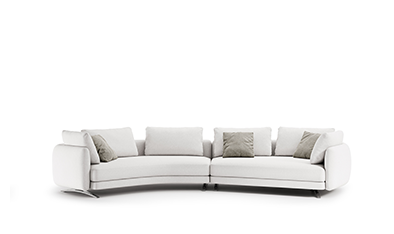
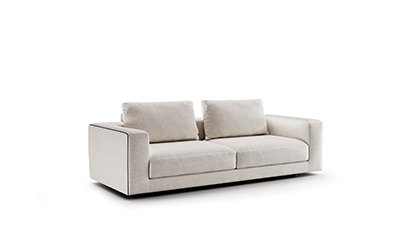
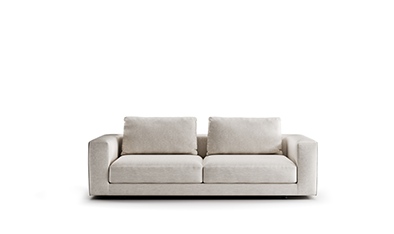
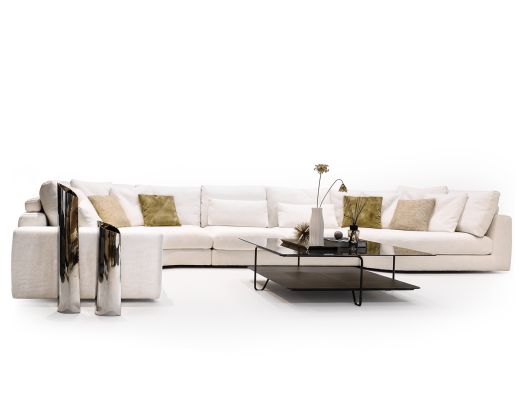
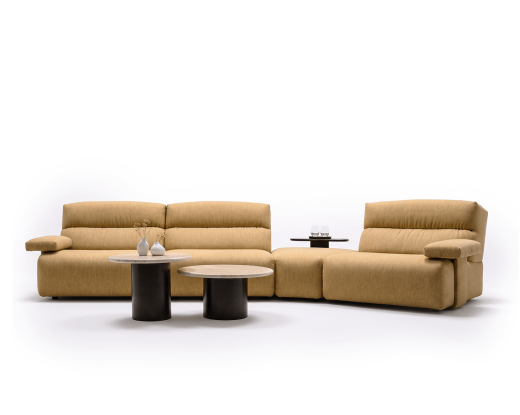
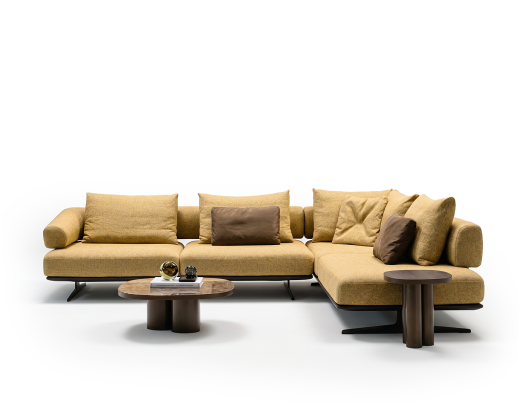
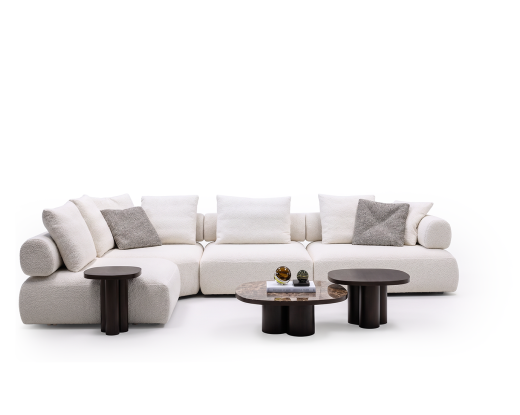
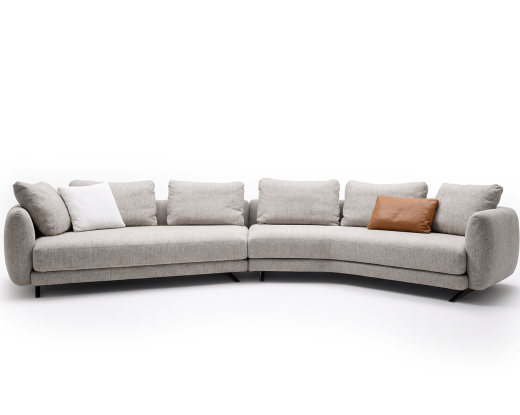
Creating a cohesive interior no longer means purchasing a complete furniture set from a single collection. OLTA encourages a more thoughtful approach: combining sofas, armchairs, and tables across collections to reflect how people truly live. When proportions, materials, and scales are aligned, mixed arrangements feel intentional rather than accidental.
Start with a Sofa as the Anchor
Every composition begins with a central element. Ritz and Hudson sofas offer clearly defined forms that work well as visual anchors. Their balanced proportions make them compatible with a wide range of complementary pieces, allowing the sofa to set the rhythm without dominating the space.

Introduce Contrast Through Seating
Once the main sofa is in place, contrast adds character. Armchairs such as Ray—with its sculptural silhouette—or the more compact Kelly can be positioned independently, creating flexible seating zones. Instead of mirroring the sofa, these pieces introduce variation while maintaining visual coherence through shared material palettes.

Coffee Tables as Functional Connectors
Tables play a crucial role in tying different elements together. The Metro coffee table, for instance, offers restrained geometry that pairs well with both structured and softer seating forms. In larger layouts, combining it with Orio allows for layered functionality, adapting the arrangement to everyday use without overcrowding the space.

Modular Thinking Beyond the Sofa
Mixing does not stop at individual pieces. Modular systems—Diva’s clean-lined modules, for example—can be paired with standalone furniture to create hybrid layouts. This approach works especially well in open-plan interiors, where the sofa defines zones while armchairs and tables provide flexibility.
Balance Scale and Distance
Successful mix-and-match interiors rely on proportion. Maintain consistent seat heights and allow clear circulation paths measured in centimeters. Thoughtful spacing ensures that each piece retains its function while contributing to a unified whole.
Practical Guidelines for Mixing OLTA Pieces
- Choose one dominant form and let other elements play a supporting role
- Repeat materials or finishes to maintain visual continuity
- Use tables to bridge differences in sofa and armchair geometry
FAQ
Can OLTA pieces from different collections be combined?
Yes. OLTA designs its collections with compatible proportions, making cross-collection combinations both functional and visually consistent.
Is it better to mix within one category or across categories?
The most balanced interiors often combine both—pairing a sofa from one line with armchairs and tables from others.
Do mixed arrangements work in smaller spaces?
Yes. Compact pieces such as Kelly or streamlined tables like Metro are well suited to limited interiors.
Are OLTA products produced in Europe?
Yes. All pieces reflect European craftsmanship and design quality.
When choosing living room furniture, we often focus on appearance over comfort. But understanding what creates lasting comfort helps you invest in pieces that enhance daily life for years.
Construction quality: the invisible foundation
Solid hardwood frames provide stability and prevent sagging over time. Quality joinery ensures the frame won’t loosen with regular use.
Professional support systems ensure even weight distribution and long-lasting comfort. Combined with solid hardwood frames, these systems maintain their properties for years of daily use.
Cushion composition: finding your perfect feel
High-density foam provides structure and prevents sagging, while down and feathers add softness and adaptability. Olta’s approach combines memory foam with natural feathers, creating cushions that conform to your body while maintaining shape over time.
Ergonomic proportions matter
Proper seat depth allows comfortable sitting without cutting circulation behind knees.
Appropriate back height supports your spine without restricting movement.
Collections like Amalfi and Maxwell demonstrate how refined proportions create comfort through carefully calculated dimensions for both upright sitting and relaxed reclining.

Fabric choice affects daily comfort
Breathable fabrics prevent overheating during extended use, while appropriate texture provides grip to prevent sliding. Consider how fabric interacts with your routine – smooth surfaces for formal sitting, textured materials for stability while reading or working.
Modularity for real-life needs
Modular systems like Goya or Oxygenadapt to different activities and space requirements. This flexibility ensures your furniture serves current needs rather than limiting options.

Size and scale for your space
Proper scale affects psychological comfort as much as physical comfort. For smaller spaces, Grey or Ray armchairs provide full comfort without dominating. Larger areas benefit from substantial pieces like Onyx or expansive modular arrangements.
Long-term comfort considerations
Quality construction maintains comfort properties over time while cheaper alternatives often disappoint as they age. Consider maintenance too – removable cushion covers and quality details ensure your investment remains comfortable and attractive.
FAQ
Q: How do I know if a sofa will remain comfortable after years of use?
A: Look for solid hardwood frames, professional support systems, and premium foam and feather combinations. Olta’s construction techniques in Onyx and Elixir collections maintain comfort properties even with intensive daily use.
Q: What’s the difference between modular and classic sofas for long-term comfort?
A: Modular systems like Goya and Oxygen offer adaptability – reconfigure for different activities and replace individual elements if needed. These can include both individual modules and complete sofa units that work as part of a larger system. Classic pieces like Amalfi provide consistent, refined comfort with elegant fixed proportions and traditional single-piece construction.
Q: How important is seat depth for daily comfort?
A: Seat depth is crucial for proper circulation and posture. Olta’s collections feature carefully calculated proportions that accommodate different body types while maintaining ergonomic support for extended use.