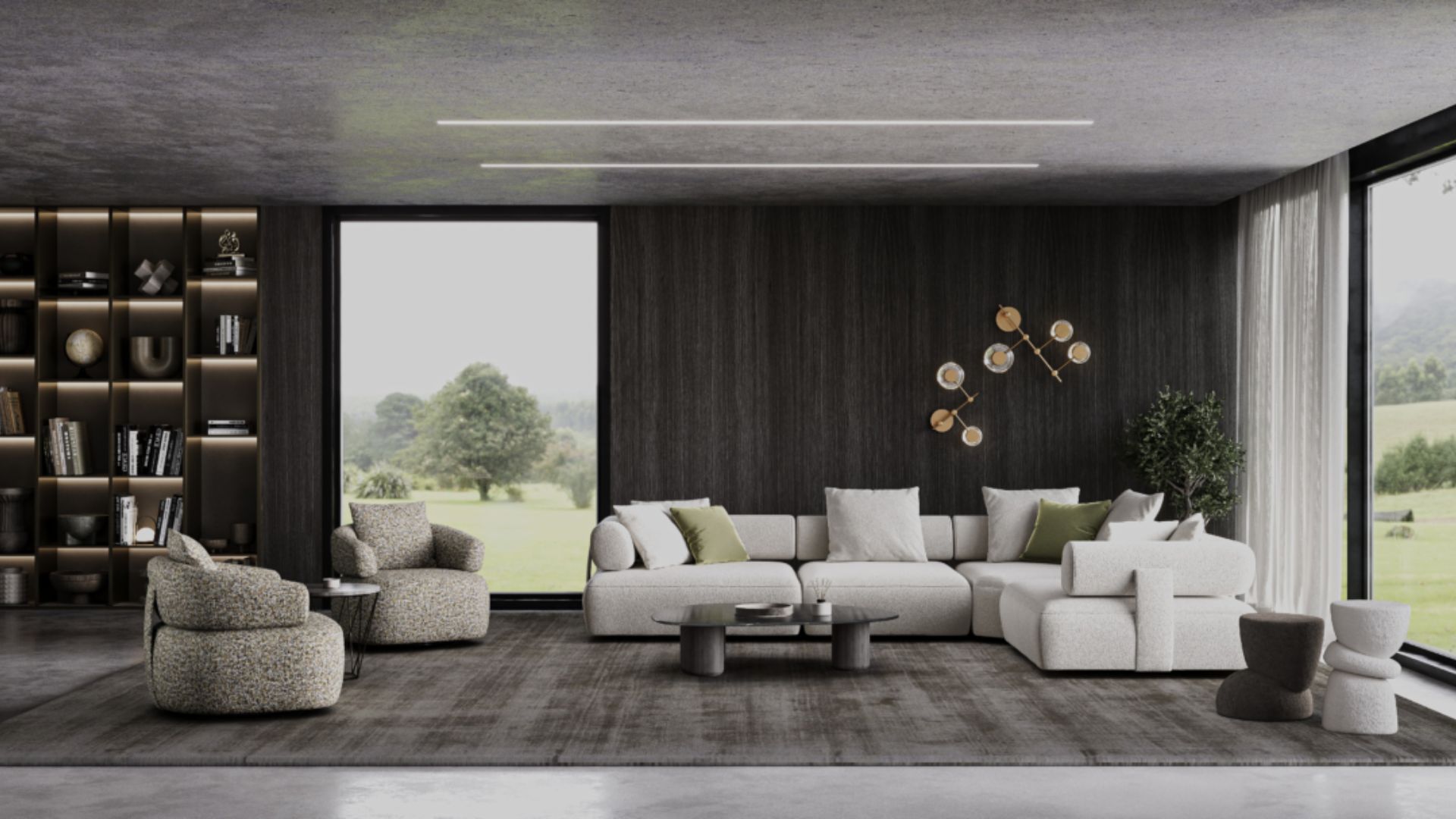

The open-plan interior has redefined the modern home, offering light and a sense of boundless space. However, these expansive layouts often struggle with a common dilemma: how to anchor a room while remaining flexible. The solution lies in the “swivel revolution” – a design shift where seating is no longer fixed in one direction. Modern swivel bases have transformed the armchair from a static object into a pivot point for the entire household.
Creating a 360-Degree Living Experience
Traditional armchairs often force a choice between facing the fireplace, the television, or the sofa. A swivel base eliminates this compromise. It allows the user to transition from a private reading nook to an active social circle with a single, effortless movement. The Ray armchair is a prime example of this versatility, its ergonomic silhouette paired with a discreet swivel mechanism makes it the perfect centerpiece for a multifunctional room.

This fluidity is essential in homes where the kitchen, dining, and living areas merge. By placing a swivel-based chair in the “transitional zone,” you create a bridge between spaces. A person resting in a Lenox armchair can pivot toward the kitchen to engage in a conversation with the cook, then turn back toward the living room to rejoin the main social group, ensuring they remain part of the flow regardless of their orientation.

Architectural Harmony and Movement
Beyond social flexibility, swivel bases offer architectural advantages. They allow for a more minimalist furniture arrangement because one chair can serve multiple purposes. Instead of crowding a room with multiple seating sets, a well-placed swivel piece maintains an airy, uncluttered aesthetic.
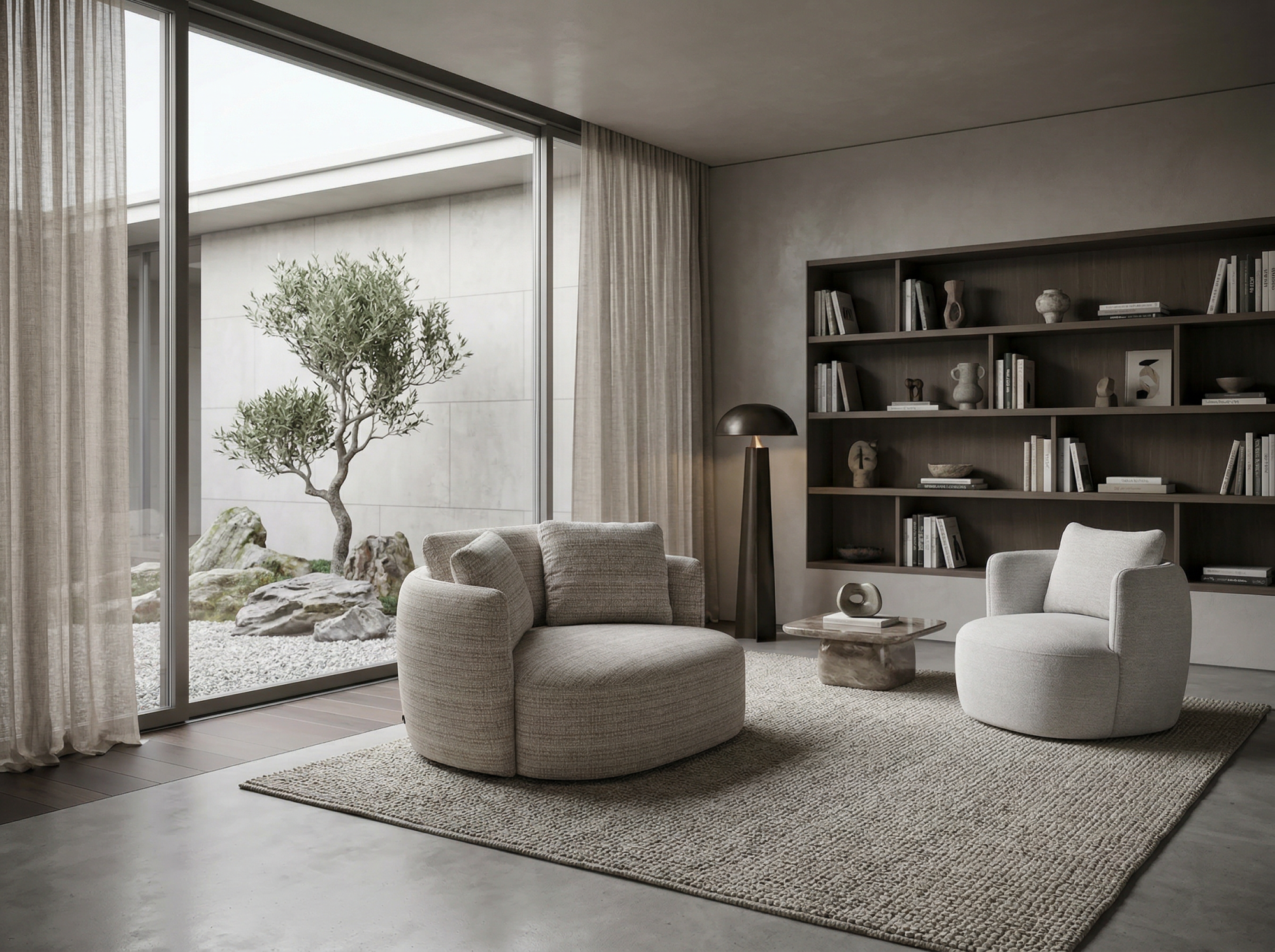
The Coco armchair – noted for its soft, inviting curves – works exceptionally well when positioned near large windows or glass walls. The ability to rotate toward the view during the day and toward the interior in the evening maximizes the room’s potential. This dynamic movement ensures that the furniture feels integrated into the life of the home, rather than just being a decorative barrier.
Designing the Pivot Zone
- Clearance and Radius: To ensure the swivel function is fully utilized, allow at least 50 – 60 cm of clearance around the chair. This prevents the backrest from hitting walls or other furniture during rotation.
- Tonal Unity: Since a swivel chair will be viewed from every possible angle, ensure its upholstery complements all zones of the open-plan space – from the kitchen cabinetry to the sofa fabric.
- Ergonomic Pairing: Pair your swivel seating with a low-profile coffee table. The Orio table series offers a stable, accessible surface that remains within reach even as the user changes their orientation.
FAQ
Q: Do swivel bases scratch delicate flooring? A: High-quality European designs feature protective bases or glides designed specifically for modern interiors. When placed on a large rug, the base remains even more secure, providing a stable rotation without impacting the floor surface.
Q: Can a swivel chair work next to a large modular sofa? A: Absolutely. In fact, a swivel chair like Ray provides a necessary visual counterpoint to the long, horizontal lines of a Horizon modular system. It breaks the rigidity of the layout and introduces a sense of spontaneity to the arrangement.
Q: Are swivel chairs as stable as fixed-leg models? A: Yes. Modern engineering ensures that the center of gravity remains low and balanced. Whether you are leaning back for relaxation or pivoting to join a conversation, the internal mechanism is designed for smooth, silent, and stable movement.
Q: How much space should I leave between a swivel chair and a coffee table? A: To allow for a full range of motion, maintain a distance of approximately 45 – 50 cm. This ensures that the user can rotate the seat comfortably without their knees or the chair’s frame catching on the edge of a table, such as the Six models.
Q: Is the swivel mechanism visible or does it affect the chair’s aesthetic? A: In contemporary models, the mechanism is usually integrated into the base or hidden beneath the upholstery. This ensures that the armchair maintains its clean, architectural silhouette – as seen in the Coco or Oval designs – while offering the hidden benefit of 360-degree movement.