
It is one of the most common living room dilemmas: the only wall long enough for the sofa happens to be the one with the window in it. The short answer is yes, a sofa can absolutely sit in front of a window – designers do it all the time, and in many rooms it is actually the smartest layout available. The longer answer involves a handful of details that decide whether the result looks intentional or accidental.
Why this layout works more often than people think
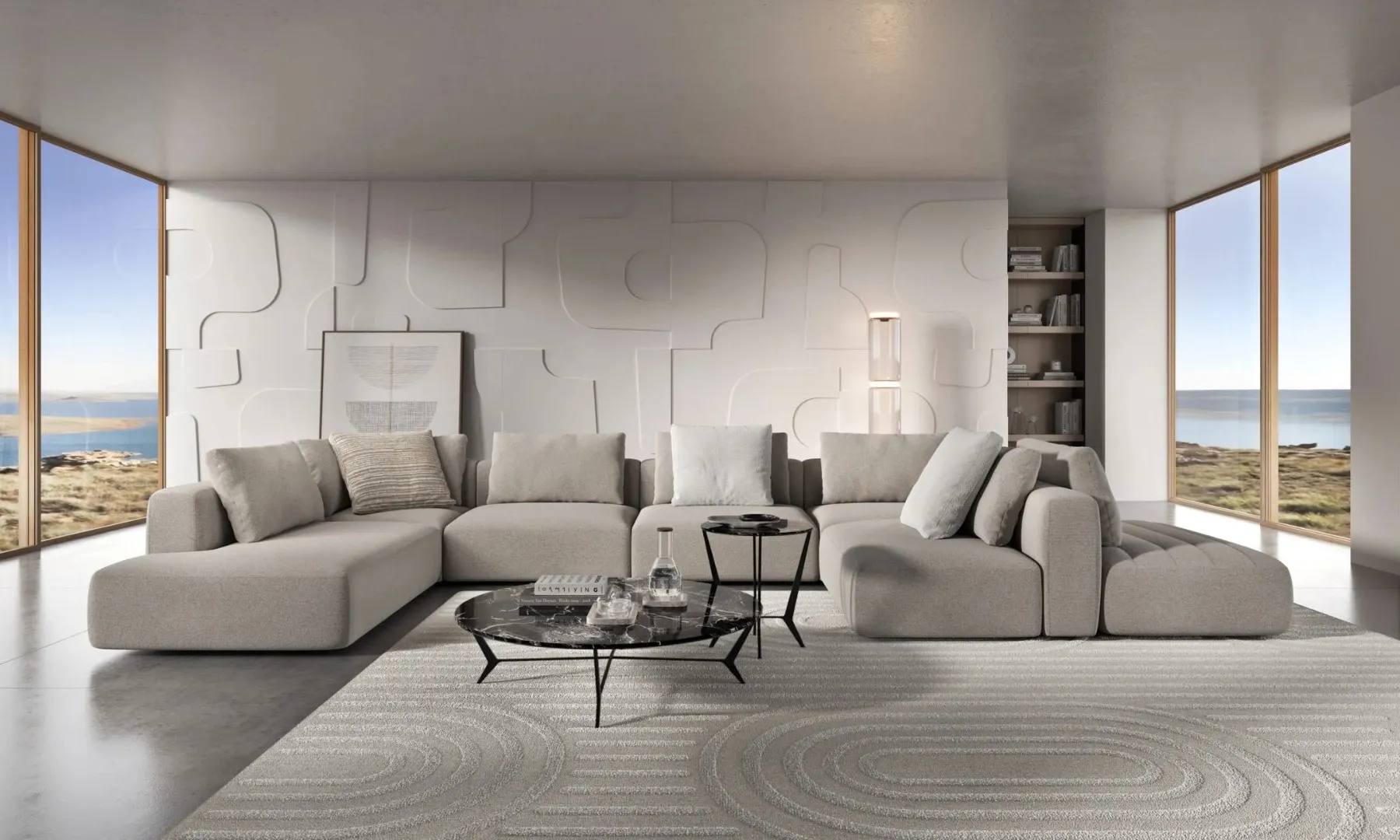
A sofa placed under a window pulls the seating area toward natural light instead of pushing it against a blank interior wall, which often makes the whole room feel brighter and more open. It also frees up the interior walls for taller furniture – a bookcase, a media unit, artwork – pieces that genuinely need a solid backdrop rather than a view. In many apartments, particularly those with windows spanning most of one wall, placing the sofa anywhere else would simply waste the room’s best light source.
Check the sill height first
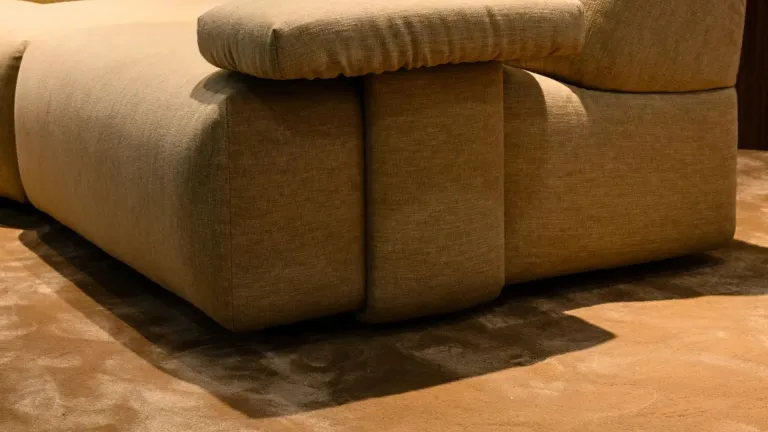
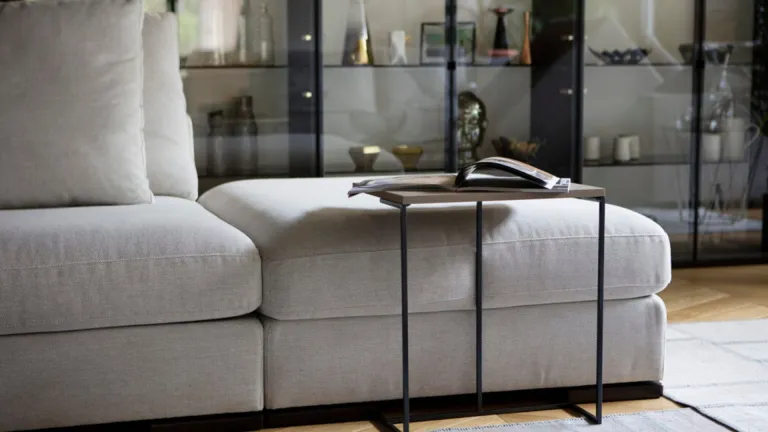
The single most important measurement before committing to this layout is where the window sill sits relative to the sofa’s backrest. If the sill is high enough that the top of the sofa’s back sits at or slightly below it, the fit will look clean and proportioned. Problems start when a tall-backed sofa rises above a low sill and partially blocks the glass – the sofa reads as an obstacle rather than furniture, and the room loses both light and view. This is exactly where a low-slung sofa earns its place: models built on short legs, with a low overall silhouette, sit comfortably beneath most standard sill heights and rarely interfere with the window at all.
Leave breathing room on both sides
A sofa pushed flush to a window, spanning wall to wall with barely an inch to spare, tends to look cramped rather than considered. Leaving a margin of space on each side, even a narrow one, lets curtains hang and move freely and gives the eye a visual pause between the furniture and the wall. If the window includes a radiator beneath it, that clearance is not just aesthetic; it also keeps the sofa from sitting directly against a heat source, which can affect both comfort and the fabric over time.
Curtains, blinds, and the sofa’s shadow
Curtains hung behind a sofa need enough clearance to fall naturally without brushing the backrest, so measure the drop before ordering. It is also worth considering light direction: a sofa facing away from a bright window can put the person in silhouette, while one facing toward it gets glare on screens during the day. Sheer curtains or adjustable blinds solve both by softening direct sun without losing the room’s light.
When a sofa under the window is the wrong call
A few situations genuinely do not work. If the window opens inward or has a low, walk-through sill, blocking it becomes a functional problem, not just a stylistic one. If the room’s main view is worth protecting – a garden, a skyline, a quiet street – a sofa facing the window usually makes better use of the space than one sitting under it.
The scenario decides the layout
As with most furnishing decisions, the right answer comes back to how the room is actually used. A sofa under the window works beautifully in a room where daylight and openness matter most during the day. A sofa facing the window works better when the view itself is the main event, or when evening comfort and screen glare take priority over daytime brightness. Neither layout is a compromise – each one simply serves a different version of how the room gets lived in.
FAQ
Is it a design mistake to put a sofa in front of a window? No, it is a common and often practical layout, especially in rooms where the window wall is the only one long enough for the sofa. The key is checking sill height and leaving enough clearance for curtains, rather than avoiding the window altogether.
What height of sofa works best in front of a window? A low-backed or low-slung sofa is the safest choice, since it typically sits below or level with the window sill and does not block the glass. A tall-backed sofa can look crowded or obstruct the view if the sill sits low.
How much space should I leave between the sofa and the window frame? Aim for a visible margin on each side rather than pushing the sofa flush against the wall. This gives curtains room to hang and move naturally and prevents the layout from feeling cramped, especially if a radiator sits beneath the window.
Will a sofa in front of a window get too much sun or glare? It can, particularly for screens and reading. Sheer curtains or adjustable blinds are the easiest fix, softening direct light during the day without losing brightness in the room.
When should I avoid placing a sofa in front of a window? Skip this layout if the window opens inward, has a low walk-through sill, or if the outside view is the room’s main feature – in those cases, facing the sofa toward the window usually makes more sense than placing it underneath.