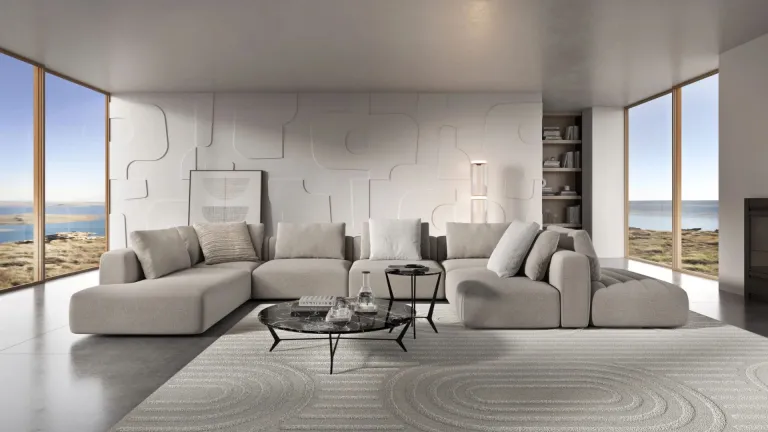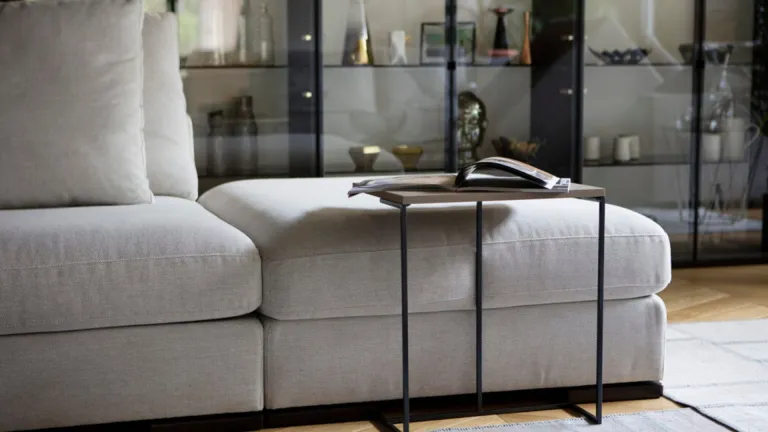

Walk into a beautifully furnished living room, and something can still feel slightly off – the sofa looks good, the coffee table is right, yet the whole arrangement seems to drift instead of settling. Nine times out of ten, the culprit is underfoot. A rug that is too small does not just look modest; it visually severs the seating group from the rest of the room, leaving each piece of furniture looking like it landed there accidentally rather than by design.
What “floating” actually looks like
A floating rug is one that only the coffee table sits on, while the front legs of the sofa and armchairs hover just outside its edges. From above, it reads as a small island stranded in a sea of bare floor, with furniture scattered loosely around it rather than gathered by it. The effect is subtle but consistent: rooms with floating rugs tend to feel smaller, choppier, and less considered than they actually are, no matter how good the furniture itself might be.
The rule designers actually use
The most reliable fix is simple to state, if not always simple to shop for: at least the front legs of every major seating piece should rest on the rug. This single rule does more to visually unify a living room than any other styling decision. It applies whether you are working with a single sofa and two armchairs or a modular, corner arrangement – the rug’s job is to draw an outline around the entire conversation area, not just the empty middle of it.
There are three common approaches, and the right one depends on the room. All-in works best in generously sized living rooms, with every leg of every seating piece resting on the rug and the coffee table floating within it. Front-legs-only suits mid-sized rooms and tighter budgets, keeping the group anchored without covering the whole floor. All-off, where the rug sits entirely in front of the seating with nothing touching it, is the one configuration worth avoiding – it is the exact floating effect this article is about.
Sizing for a modular or corner sofa
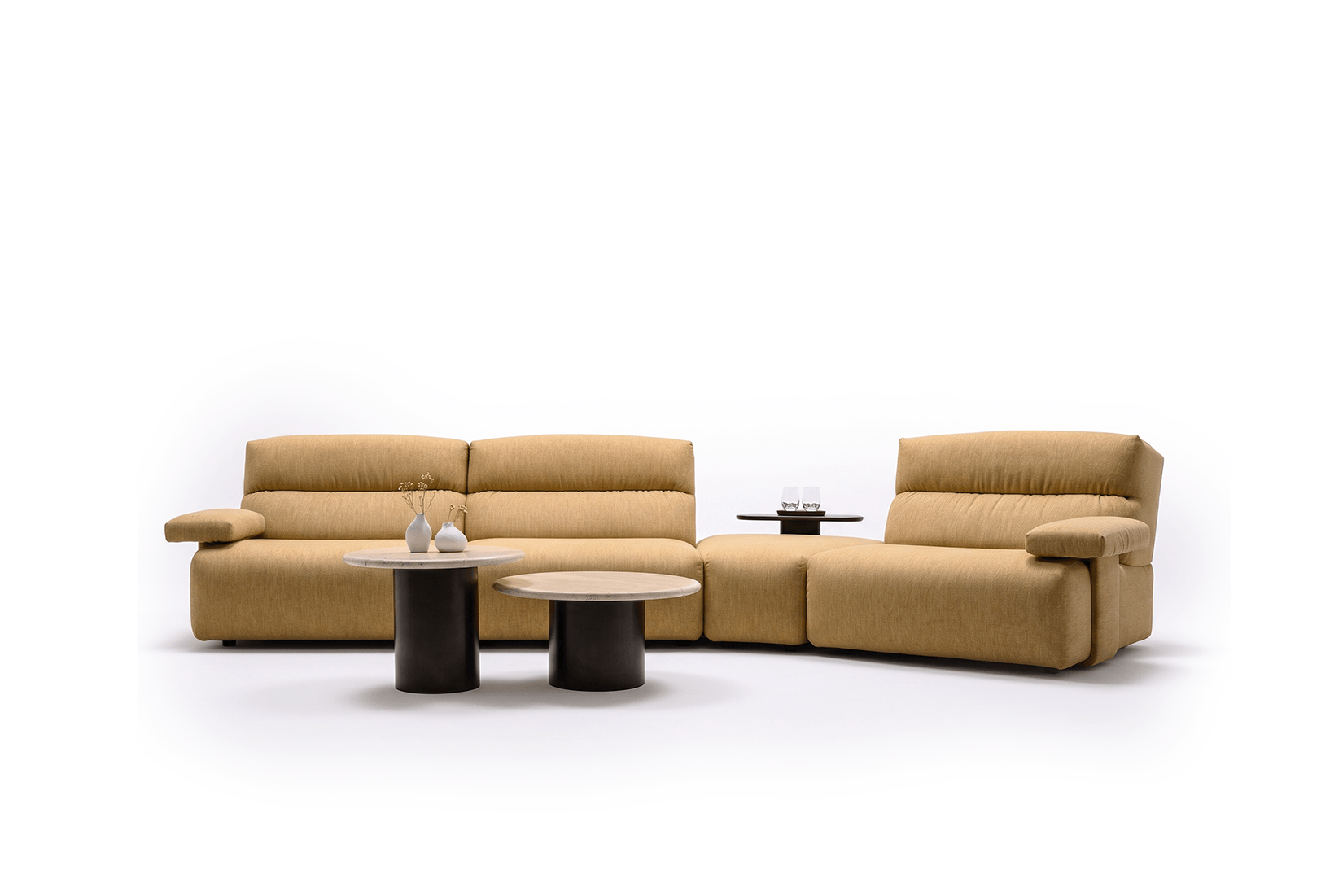
Modular and corner sofas add complexity, since their footprint changes shape depending on configuration. The safest approach is to measure the arrangement you use most often, not the largest theoretical layout, and choose a rug that extends 15 to 20 centimeters beyond the front edge of the seating on the open side. For a design like FLAN, whose modules can be rearranged into a corner sofa, two facing sofas, or single armchairs, size the rug for your default, everyday configuration – one sized for an occasional party layout will look oversized the rest of the time.
Legs, visibility, and the rug underneath
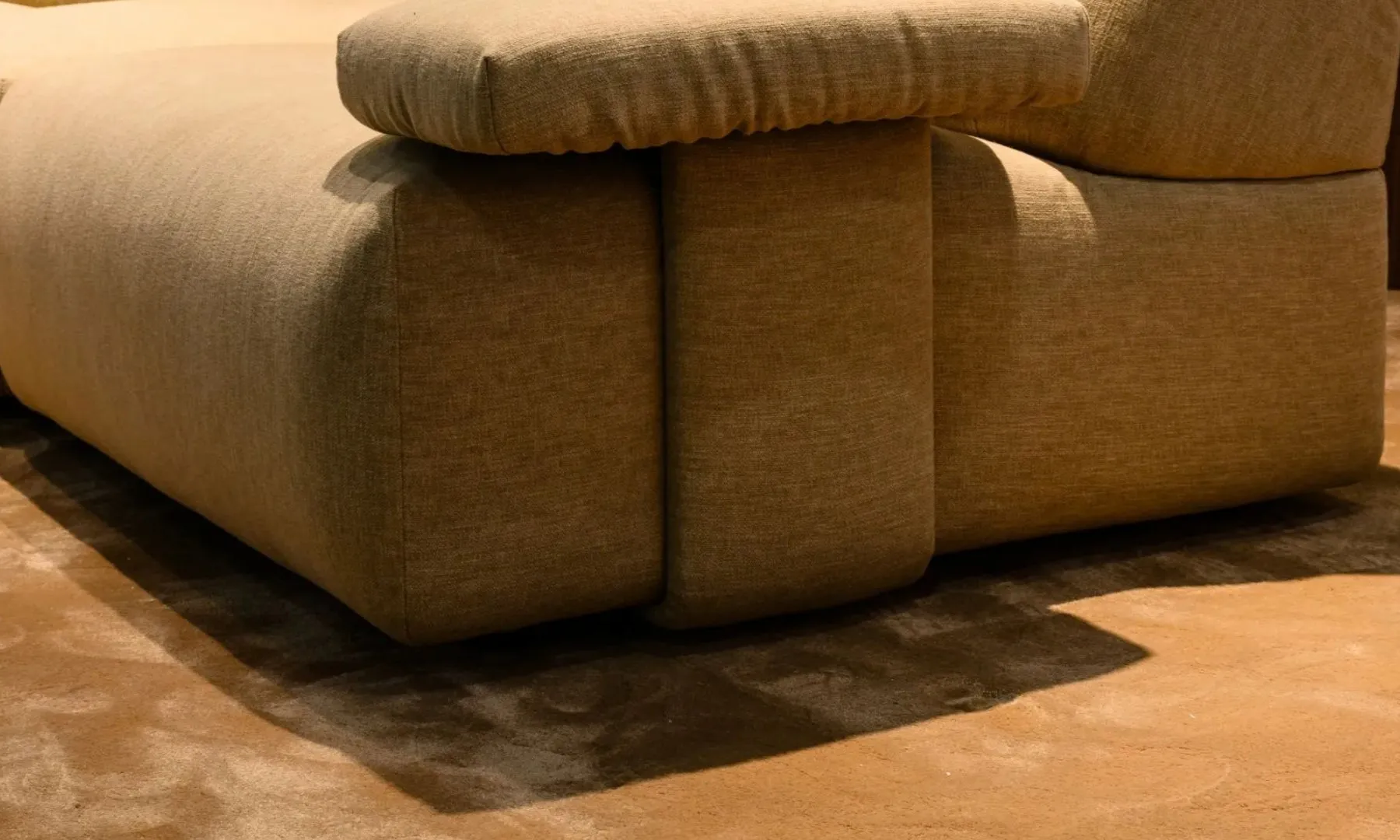
How a rug reads also depends on the sofa’s leg height. Sofas with very low legs sit close to the rug’s surface, so fabric and floor blend almost seamlessly, and a rug extending slightly under the sofa reads as one continuous plane. Sofas raised on taller, more visible legs expose more negative space, which means the rug’s pattern and color are more visible underneath and deserve a little more thought.
A quick way to check your own room
Before buying, try this: mark the intended rug’s corners on the floor with painter’s tape and stand back from the doorway. If any major piece of seating sits entirely outside the taped outline, the rug is too small for that layout. It is a five-minute test that saves the far more common mistake of ordering a rug based on the size of the coffee table alone, which is how most floating rugs end up in living rooms in the first place.
Anchored, not accidental
A living room does not need a bigger rug to feel bigger – it needs the right-sized one, correctly connected to the furniture sitting on it. Once the front legs land where they should, the whole seating arrangement stops looking scattered and starts reading as one deliberate composition, exactly as it was meant to.
FAQ
How much of the sofa should sit on the rug? At minimum, the front legs of the sofa and any accompanying armchairs should rest on the rug. In larger rooms, all legs on the rug create the most cohesive look; in smaller rooms, front-legs-only still anchors the seating group effectively.
What is the most common rug sizing mistake? Choosing a rug based only on the coffee table, so it ends up floating in the middle of the room with the sofa and chairs sitting entirely outside its edges. This visually disconnects the seating group instead of unifying it.
How do I size a rug for a modular or corner sofa? Measure your everyday configuration, not the largest possible layout, and choose a rug that extends 15 to 20 centimeters beyond the front edge of the seating on the open side. Sizing for a rare, expanded arrangement usually leaves the rug looking oversized the rest of the time.
Does the sofa’s leg height affect which rug looks best? Yes. Sofas with very low legs sit close to the rug, so the two surfaces read almost as one plane. Sofas on taller, more visible legs expose more of the rug underneath, which makes the rug’s pattern and color more noticeable in the finished room.
Is there a quick way to check if a rug will be the right size? Mark the rug’s planned dimensions on the floor with painter’s tape and view the room from the doorway. If any major seating piece falls entirely outside the taped area, size up before ordering.