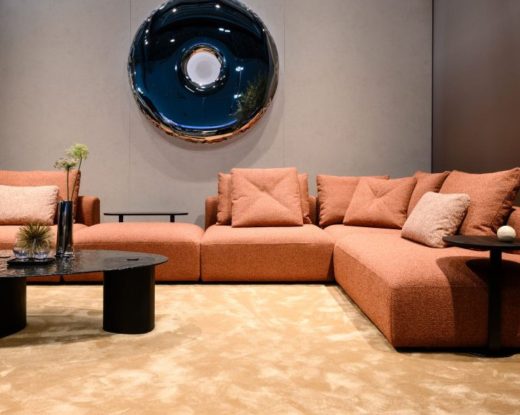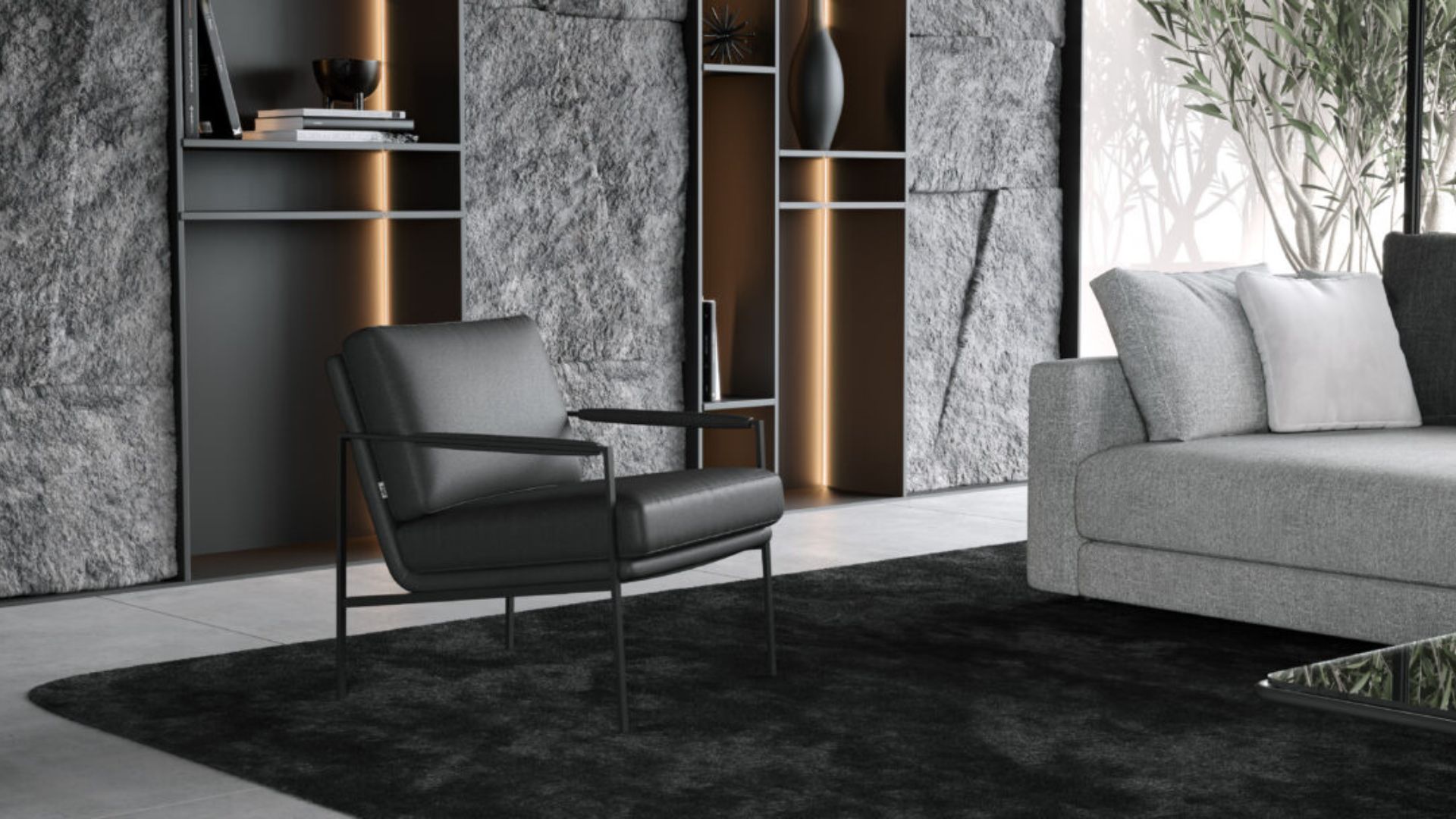

The design language of the 1970s has returned with a sophisticated, modern twist. This revival is defined by the striking contrast between the cold, reflective surfaces of chrome and the plush, inviting warmth of high-end upholstery. By merging these two worlds, you create an interior that feels both nostalgic and firmly rooted in contemporary European luxury.
The Foundation of Softness
To successfully execute the 70s revival, the seating must feel substantial and unapologetically comfortable. Mistral’s deep, generous cushions and low-slung profile serve as an ideal anchor for this look. When draped in a textured bouclé or a rich velvet, this sofa provides the necessary visual softness to balance the sharp reflections of metallic accents. The key is to choose silhouettes that emphasize relaxation and “slow living.”

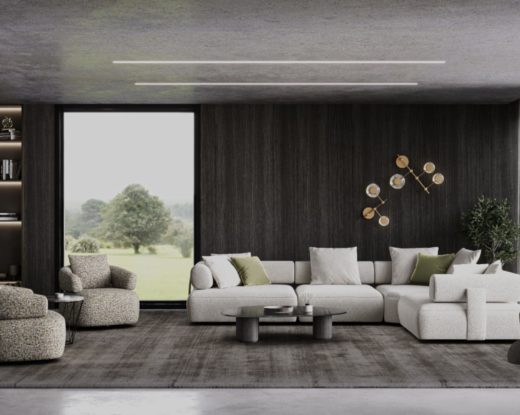
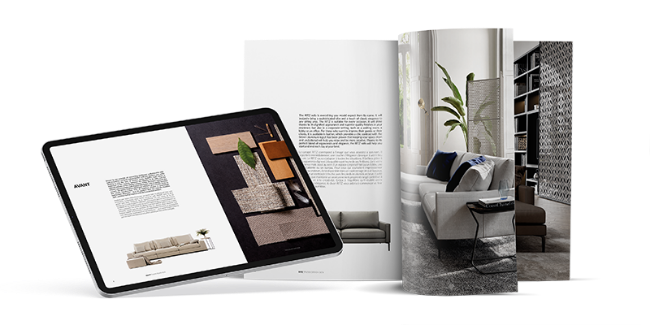
Similarly, the Avant sofa – with its clean lines and ergonomic support – offers a more structured take on the retro trend. Its precise tailoring highlights the quality of the craftsmanship, ensuring that even the most comfort-oriented pieces maintain a sense of architectural discipline. Placing a piece like this against a backdrop of metallic wallpaper or next to a chrome floor lamp creates a dynamic tension that defines the modern 1970s aesthetic.
Metallic Accents as Visual Jewelry
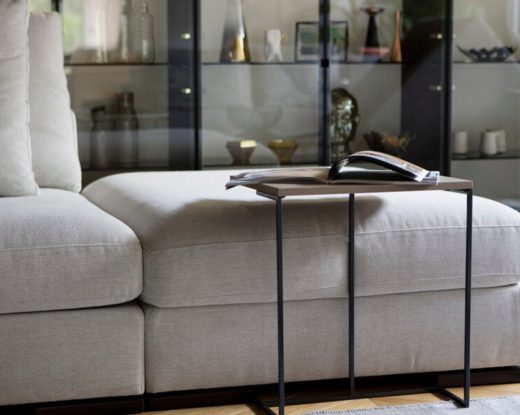
Chrome and polished steel act as the jewelry of the room. Instead of overwhelming the space with metal, use it strategically through lighting and complementary furniture. The Orio table series, featuring minimalist black steel frames and elegant tops, provides a sophisticated, graphic anchor that offsets both the brilliance of chrome accents and the matte finish of a fabric sofa. The interplay between the cool metallic elements and the warm textile creates a sensory richness that is a hallmark of this style.

For a more integrated approach, consider the smaller details. The Lenox armchair features distinctive legs in brown or black painted steel, providing a muted, architectural foundation that allows other chrome elements in the room to stand out. This consistency in metallic details – from the dark steel feet of an armchair to the minimalist frames of surrounding tables – creates a cohesive narrative without making the room feel sterile.
Textural Contrast and Color
The “Modern 70s” palette often leans towards earth tones: ochre, terracotta, and deep moss green. These colors naturally enhance the brilliance of chrome. To add depth, layer different materials. Pairing the refined silhouette of a Grey armchair with the chunky, high-texture weave of a larger modular system creates a sophisticated environment where every piece has its own tactile identity.

Practical Tips for the Retro Revival
- Balance Proportions: Use a “heavy” sofa like the Samoa to anchor the room, then lighten the look with “leggy” metallic side tables.
- Warm the Metal: Chrome can feel cold; counteract this by incorporating warm wood elements or soft, ambient lighting with a high color rendering index.
- Reflective Placement: Position your chrome accents where they can catch natural light, but avoid placing them directly opposite a TV to prevent glare.
FAQ
Q: Is the 70s revival suitable for small living rooms? A: Yes. By using pieces with raised legs, such as the Hudson sofa, you keep the floor visible, which creates an illusion of more space while still embracing the bold textures of the era.
Q: Which table heights work best with low-slung 70s-style sofas? A: For low-profile seating, a table height of 50–55 cm is ideal. The Taxi table is an excellent choice here, providing easy access to the surface without towering over the sofa.Q: Can I mix chrome with other metals in this style? A: While the 1970s were dominated by chrome and brass, it is best to stick to one dominant metal. If you are using chrome lamps or accessories, pair them with a table that has a neutral or dark frame, such as Six, to let the metallic accents truly shine. This ensures a polished look without the visual clutter of clashing metal finishes.