
The placement of furniture is often treated as an intuitive task, yet the most comfortable living rooms are governed by precise spatial relationships. Achieving “leg room luxury” is not merely about choosing the right pieces, it is about the negative space between them. The distance between a sofa and a coffee table determines the room’s ergonomic success, ensuring that the layout feels intentional and effortless.
The Science of Proxemics in the Living Room
In interior design, the standard interval for comfort lies between 35 cm and 45 cm. This range is considered the “Golden Ratio” for seating areas. It is close enough to keep a drink or a book within easy reach of the sofa, yet wide enough to allow for natural leg movement and easy passage.
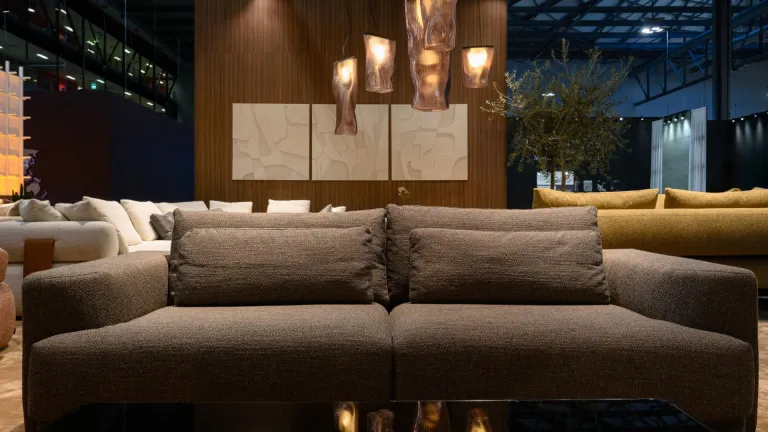
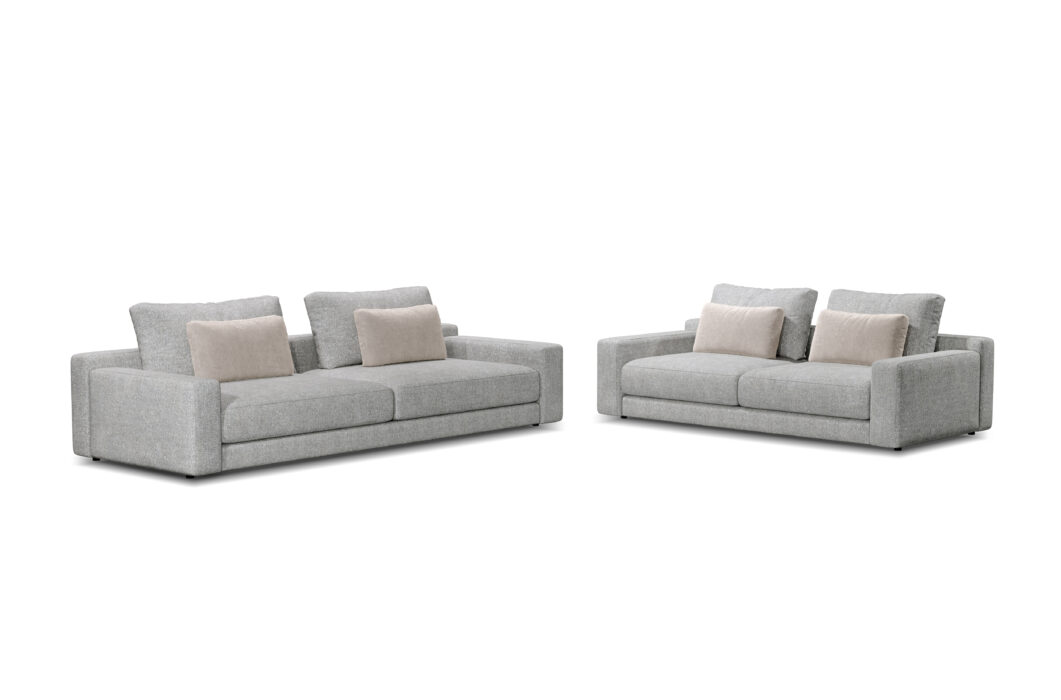
When arranging a substantial piece, the Amalfi modular system – with its impressive 102 cm seat depth – requires a careful approach to spacing. Because of its generous proportions, maintaining a clear 45 cm boundary ensures that the lounging experience feels expansive rather than cramped. This distance allows the user to transition from a seated position to a standing one without navigating a tight bottleneck.

Aligning Heights for Visual and Physical Flow
The horizontal distance is only one half of the equation, the vertical relationship between the seat and the table surface is equally vital. For a cohesive look, the coffee table should sit at the same height as the sofa cushions, or slightly lower.
The Orio table series, featuring minimalist black steel frames, offers a sleek profile that aligns perfectly with modern, low-slung seating. By pairing a low-profile sofa with a table of similar stature, you maintain a clear line of sight across the room. This architectural alignment prevents the furniture from feeling like a series of disconnected obstacles, creating a unified “island” of relaxation.

Mastering the Walkway
While the immediate area around the sofa focuses on reachability, the outer perimeter must prioritize movement. Designers at Olta emphasize the importance of the 90 cm rule for primary traffic lanes. If your coffee table is part of a larger arrangement, ensure that the path leading into the seating zone remains unobstructed.
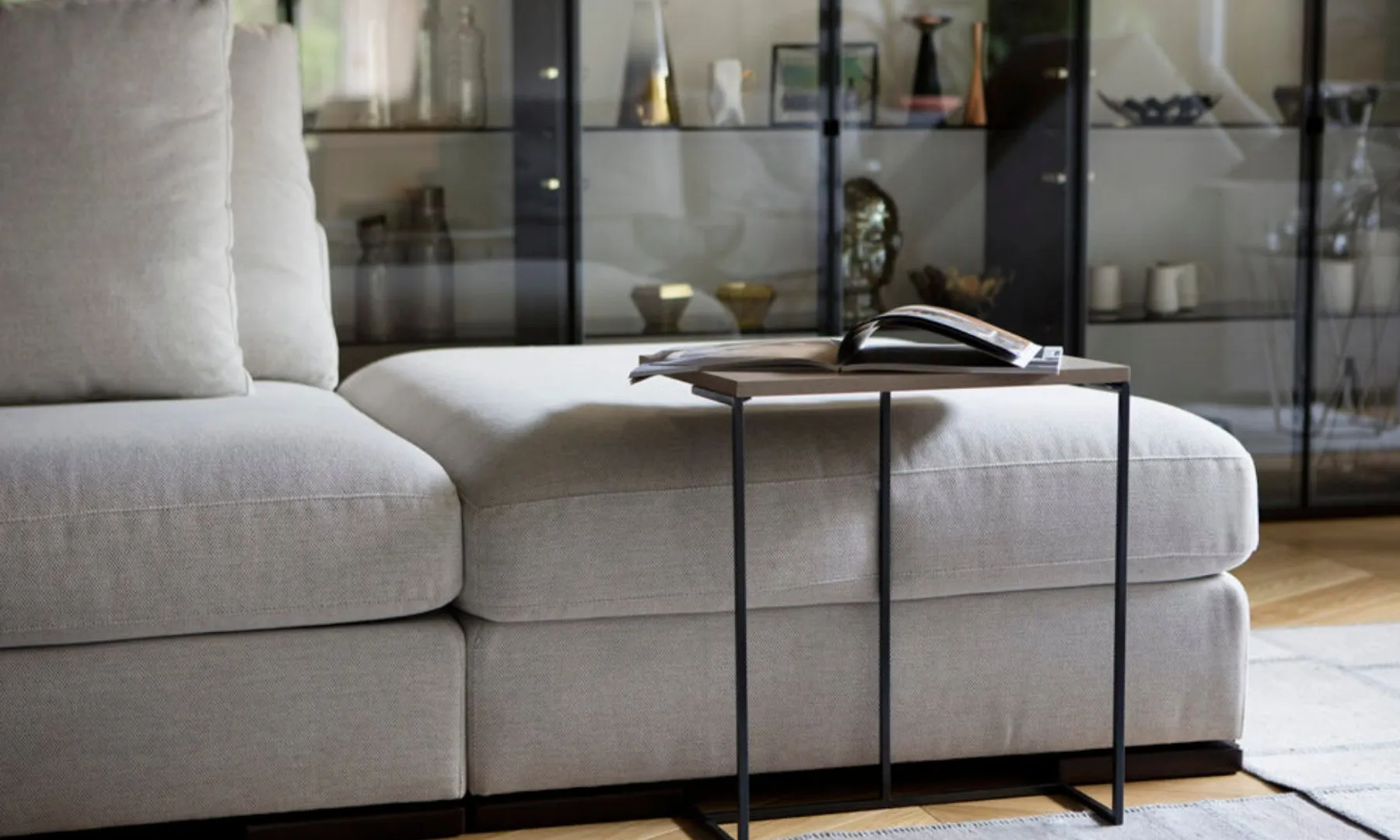
For more compact spaces, the Taxi table provides a versatile solution. Its proportions allow it to be tucked closer to the seating edge when not in use, freeing up valuable floor space. When positioned correctly, the interplay between the solid form of the sofa and the open frame of the table creates a sense of “visual lightness,” making even the most furniture-dense rooms feel airy.

Balancing Scale and Proportion
- The Two-Thirds Rule: To achieve a balanced look, your coffee table should be approximately two-thirds the length of your sofa. This ensures that everyone seated on the sofa has access to the table surface.
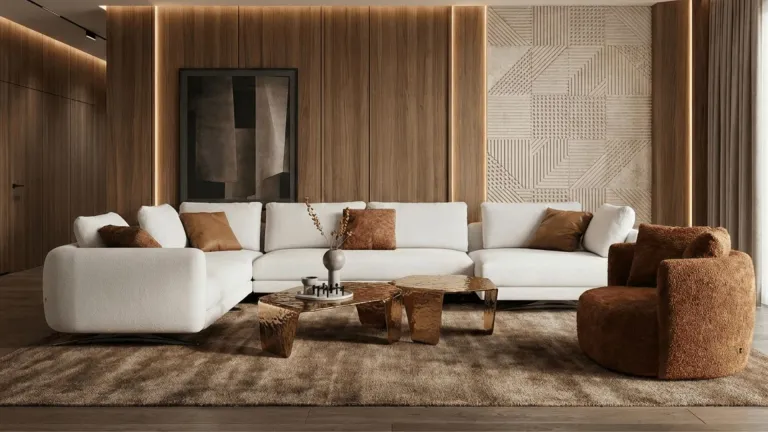
- Material Contrast: Pair the soft, textured upholstery of the Mistral sofa with the smooth, natural wood grain of a Metro coffee table. The light or dark oak finish of the table provides an organic counterpoint to the plush fabric.
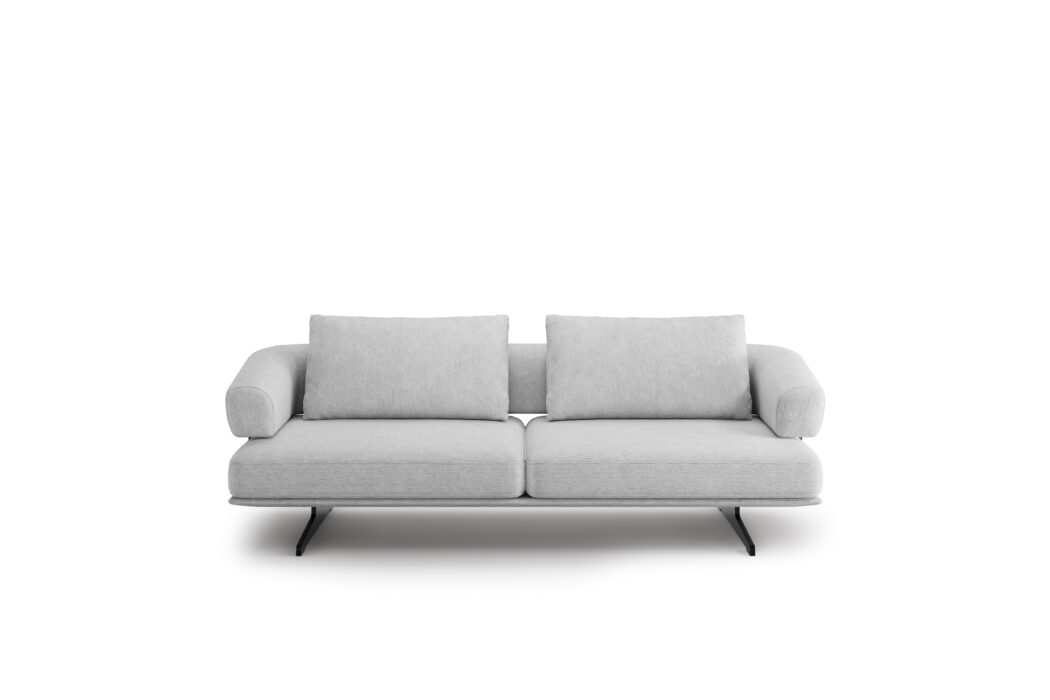
- Alternative Seating: Incorporate a Lenox armchair into the arrangement. Its availability with higher legs makes it an excellent companion for taller side tables, adding a vertical layer to the room’s layout.

FAQ
Q: Should the coffee table always be centered with the sofa?
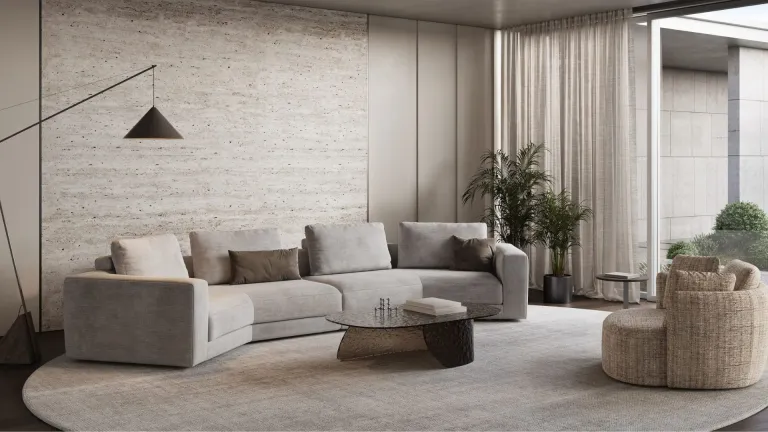
A: In a traditional setup, centering the table provides a sense of formal symmetry. However, in an asymmetrical modular arrangement – such as a configuration involving the Stone system – placing the table slightly off-center or using a cluster of smaller tables can feel more dynamic and contemporary. This approach emphasizes the organic, sculptural nature of the modules and prevents the layout from feeling too rigid.
Q: Is 35 cm enough space for someone with long legs?
A: 35 cm is the minimum recommended distance for average height. For those seeking “leg room luxury,” increasing this gap to 45 – 50 cm is an artistic decision that prioritizes physical ease, though it may require a slightly longer reach for items on the table.
Q: Can I use a pouf as a coffee table?
A: Yes. The Uno pouf is an ideal standalone choice for this purpose due to its structural stability. Alternatively, utilizing a mobile puzzle module – such as the pouf element available with the Amalfi system – offers similar versatility. To ensure it functions effectively, place a stable tray on top for drinks and maintain the standard 40 cm distance from the sofa cushions to ensure comfortable access.
Q: How does the depth of the sofa affect table placement?
A: Deep-seated models require more careful planning. With a sofa like Stone, which emphasizes a “slow living” posture, the table should be positioned toward the higher end of the 45 cm range to accommodate the more relaxed, reclined position of the users.
Q: Does the floor material impact how I measure the distance?
A: While the measurement remains the same, the visual perception changes. On a dark floor, a table with a black frame – such as those in the Orio collection – may blend in, requiring a slightly wider gap to define the boundaries of each piece clearly.