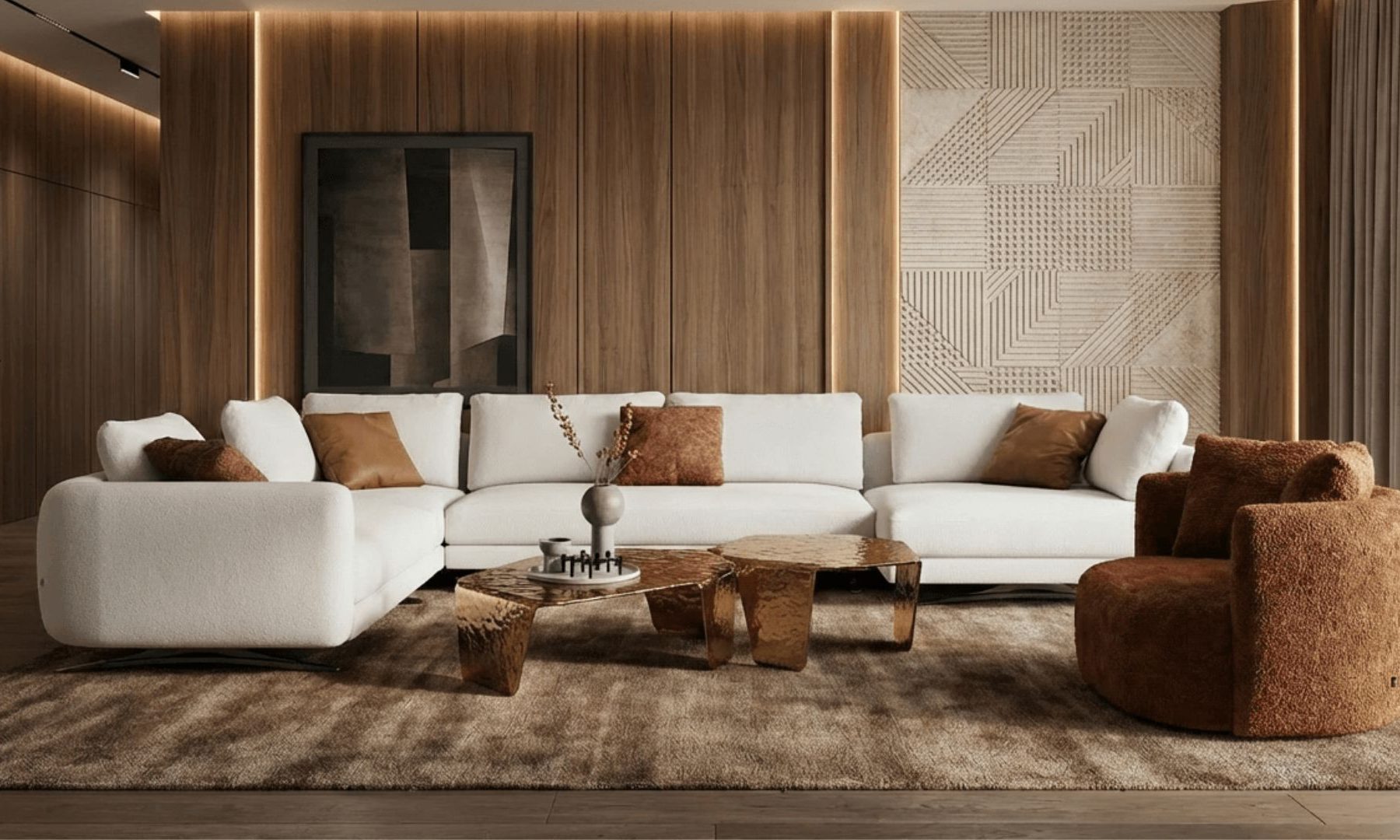

The way a home looks affects more than its visual appeal. Neuroarchitecture-the study of how built environments influence the brain-suggests that interior design can impact stress levels, emotional regulation, and overall wellbeing.
One of its key insights is the human preference for softness. Rounded forms and tactile surfaces are often perceived as safer and more calming than sharp, rigid geometries. This makes them particularly relevant in spaces intended for rest and recovery.
Why the brain responds to curves
From an evolutionary perspective, sharp edges and angular shapes can subconsciously signal potential threat. Curved forms, on the other hand, require less cognitive vigilance and are generally processed as more pleasant.
In interiors, this translates into a measurable emotional effect: softer environments tend to feel more comfortable, less stimulating, and more restorative.
This is why rounded furniture is increasingly central to wellness-oriented design.
Sofas as emotional infrastructure
In the living room, the sofa defines both the spatial and emotional structure of the interior. Its scale makes it one of the most influential objects in shaping how a space feels.
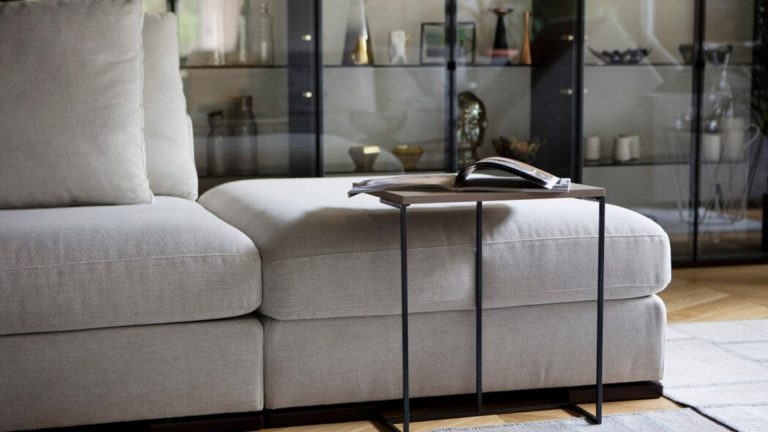
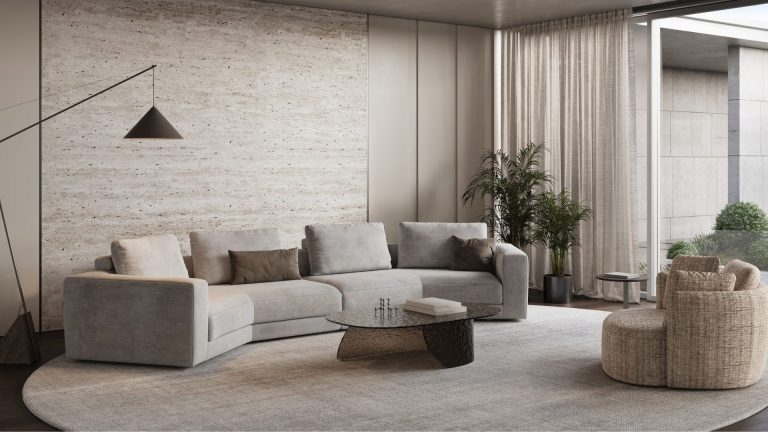
Modular systems such as Arno and Flan embody this shift toward softer, human-centred design. Their rounded modules replace rigid lines with fluid compositions, allowing interiors to feel more natural and less constrained. The result is a space that supports relaxation rather than visual tension.
Organic forms and psychological comfort
Curved furniture often evokes associations with natural environments, which humans instinctively find calming. This principle is visible in Amalfi, where flowing contours and generous proportions create a sense of visual softness.

Such biomorphic forms reduce perceptual stress and help transform interiors into environments that feel more balanced and emotionally supportive.
The role of tactile experience
Neuroarchitecture does not end with shape. Touch plays an equally important role in how we experience space.
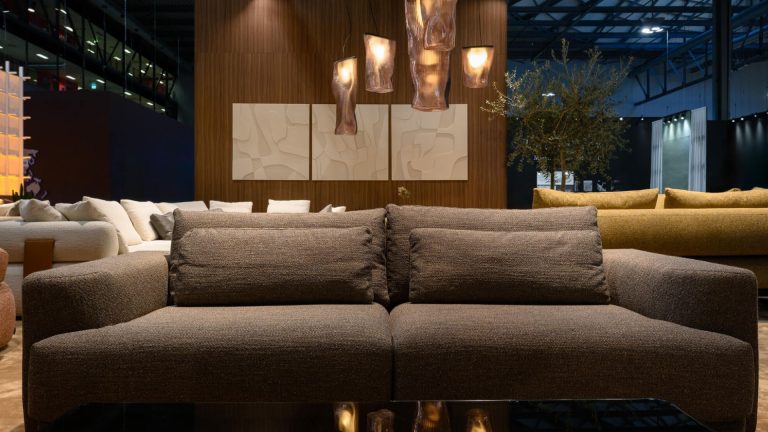
Soft upholstery, textured fabrics, and deep cushioning stimulate sensory pathways associated with comfort and safety. This tactile dimension helps regulate arousal levels and encourages relaxation.
Collections such as Elixir illustrate this principle clearly. Their enveloping forms and soft materials create a physically inviting experience that supports rest and decompression.
Small forms, strong impact
Even smaller furniture pieces contribute to the emotional tone of a space. Armchairs like Coco and Kelly introduce softer silhouettes into architectural environments often dominated by straight lines.

Placed strategically, they create intimate zones within a room-spaces for reading, reflection, or pause. These micro-environments help structure daily rhythms of rest.
Conclusion: designing for wellbeing
As interior design evolves, aesthetics alone are no longer the primary focus. The emotional and physiological effects of space are becoming equally important.
Rounded silhouettes, tactile materials, and modular flexibility are not just stylistic choices. They are tools that shape how we feel in our homes.
In this sense, furniture such as Arno, Flan, Amalfi, Elixir, Coco, and Kelly represents a broader shift toward interiors designed for calm, comfort, and psychological wellbeing.
The future of home design is not only visual. It is experiential, embodied, and deeply human.
FAQ
1. What is neuroarchitecture?
Neuroarchitecture is the study of how architectural and interior environments influence human emotions, behaviour, and physiological responses.
2. Why are rounded furniture forms considered more calming?
Curved shapes are generally perceived as safer and less threatening than sharp angles, which can reduce subconscious visual stress and support relaxation.
3. How does tactile furniture affect wellbeing?
Soft and textured surfaces engage the sense of touch, helping create feelings of comfort, safety, and emotional grounding.
4. Which furniture types best support a wellbeing-focused interior?
Modular sofas, curved armchairs, and soft upholstered forms are most commonly associated with restorative, human-centred interiors.
5. Which OLTA collections reflect these principles?
Key examples include Arno, Flan, Amalfi, Elixir, as well as armchairs Coco and Kelly, all of which emphasize softness, ergonomics, and organic form.