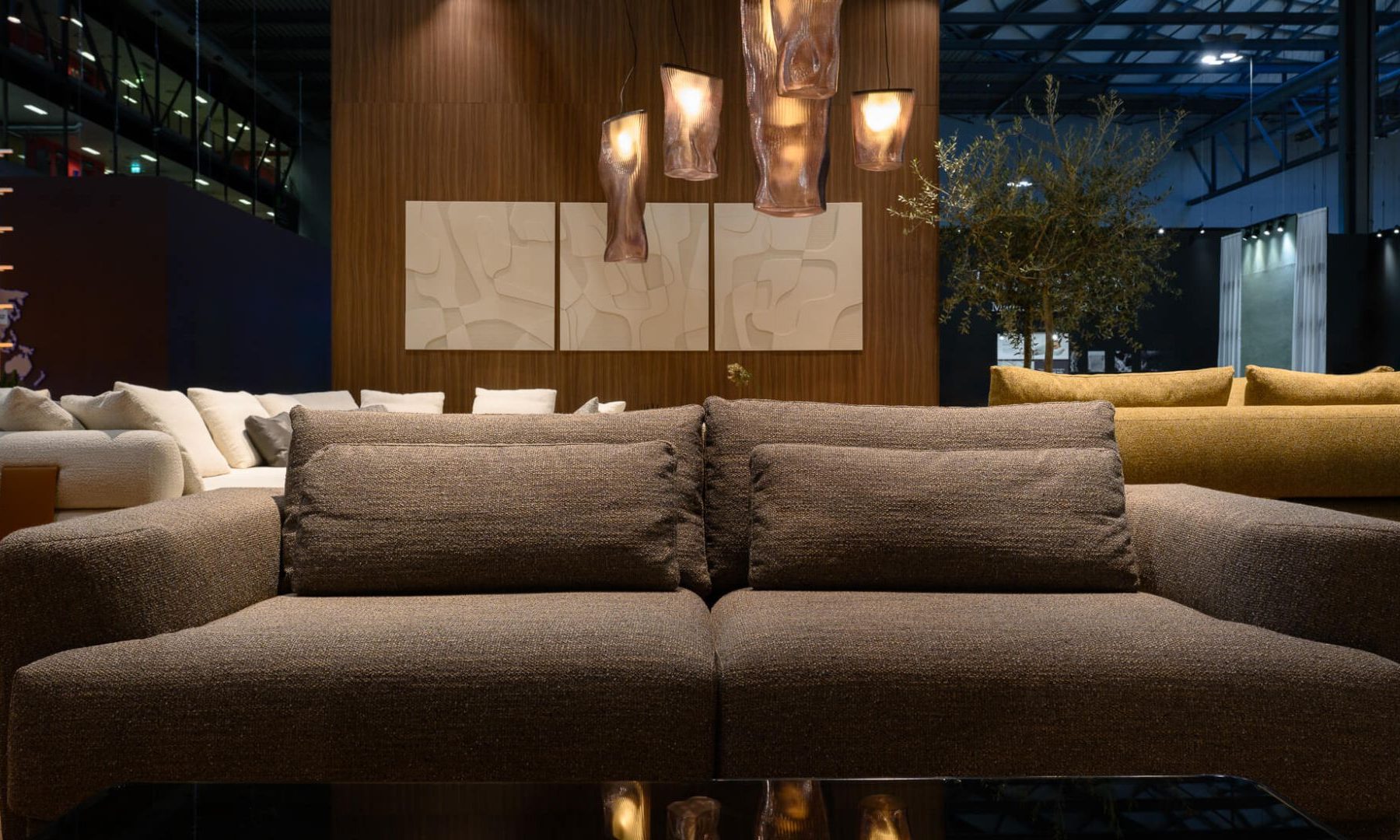

Why your furniture looks different throughout the day
Have you ever chosen the perfect upholstery fabric, only to discover that it looks entirely different once it arrives in your home?
The answer often lies not in the fabric itself but in the lighting surrounding it. While homeowners carefully consider colors, textures, and furniture silhouettes, the temperature of artificial light is frequently overlooked. Yet it plays a crucial role in how materials are perceived.
Measured in Kelvins (K), light temperature can dramatically influence the appearance of neutral and earth-toned upholstery, changing how colors, textures, and surfaces are experienced throughout the day.
Understanding the Kelvin scale
The Kelvin scale describes the visual warmth or coolness of light.
2700K–3000K: warm white light
3500K–4000K: neutral white light
5000K and above: cool daylight tones
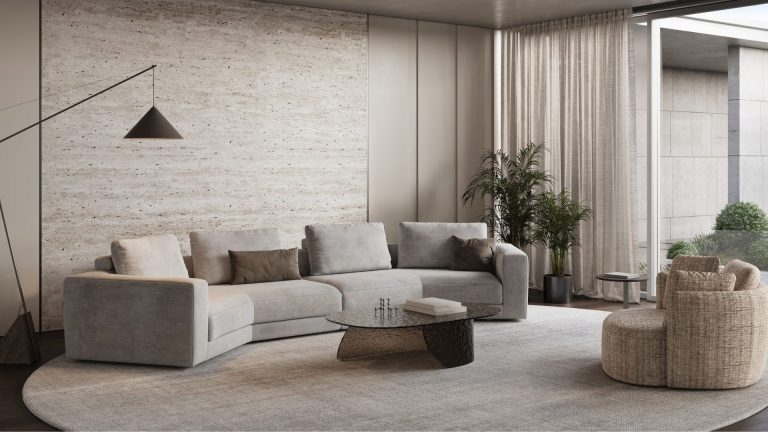
Although these variations may seem subtle, they can significantly alter the character of an interior. Warm light tends to enrich beige, taupe, sand, and caramel tones, while cooler temperatures often emphasize grey undertones and create a more architectural aesthetic.
For interiors built around natural materials and soft color palettes, lighting becomes as important as the furniture itself.
How light influences upholstery
Neutral fabrics are particularly sensitive to color temperature.
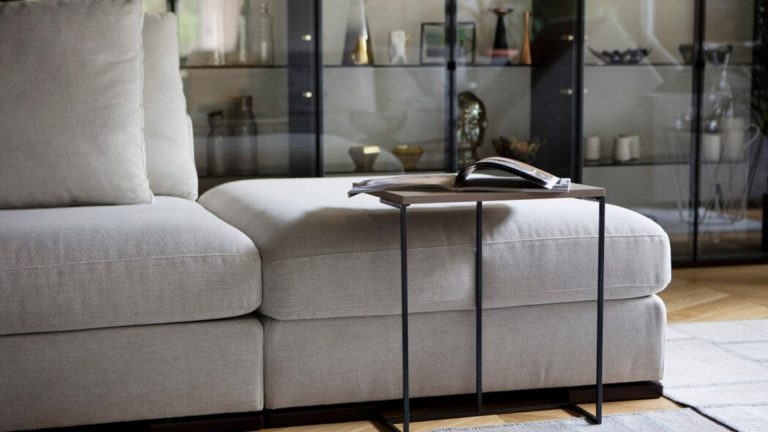
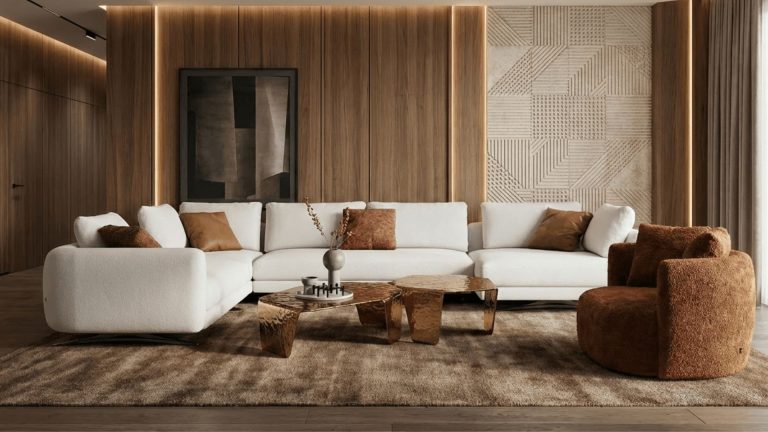
Under warm illumination, textured upholstery often appears softer, deeper, and more inviting. Bouclé fabrics reveal their tactile richness, while earthy tones gain warmth and visual depth.
In contrast, cooler lighting can make the same materials appear more structured and refined. While this effect may suit minimalist interiors, it can sometimes reduce the sense of comfort that many homeowners seek in living spaces.
This is why interior designers increasingly view lighting and furniture as a single design system rather than separate elements.
Light as part of the furniture experience
Contemporary interiors are no longer designed as collections of individual objects. Instead, they are conceived as complete sensory environments where materials, forms, and lighting work together to shape atmosphere.
This philosophy is reflected in LAVA, the lighting collection created for OLTA by designer Maciej Karpiak.
Crafted from New Glass, an innovative plant-based and biodegradable material developed as a contemporary alternative to conventional glass, LAVA explores the relationship between form, materiality, and light. Rather than functioning solely as a source of illumination, the collection acts as an atmospheric element that influences how surrounding furniture and finishes are perceived.
Its sculptural presence and soft diffusion of light help reveal the depth of upholstery fabrics, enhance natural color variations, and create a more layered visual experience.
Creating warmth through design
The growing popularity of neutral and earth-toned interiors reflects a broader desire for spaces that feel calm, grounded, and restorative.
However, achieving this atmosphere depends not only on furniture selection but also on how materials are illuminated. The same sofa can appear dramatically different under varying light temperatures.
By combining thoughtful furniture choices with carefully designed lighting solutions such as LAVA, homeowners can create interiors that feel visually balanced throughout the day while highlighting the natural beauty of fabrics, textures, and finishes. The light level can be adjusted manually or via the app, allowing the atmosphere to be tailored to different moments, needs, and times of day.
Conclusion
The Kelvin factor is more than a technical specification. It is a powerful design tool that shapes how we experience color, texture, and space.
As contemporary interiors become increasingly focused on comfort and atmosphere, lighting plays a central role in bringing furniture to life. Collections such as LAVA demonstrate how thoughtful illumination can transform the perception of materials, helping neutral and earth-toned upholstery reveal its full character.
Ultimately, great interiors are not only designed through objects—they are designed through light.
FAQ
1. What is color temperature in lighting?
Color temperature, measured in Kelvins (K), describes whether light appears warm, neutral, or cool.
2. How does lighting affect upholstery colours?
Different light temperatures can make fabrics appear warmer, cooler, lighter, darker, or more textured, significantly changing their visual character.
3. What light temperature works best with neutral interiors?
Warm white light between 2700K and 3000K is often preferred because it enhances natural tones and creates a welcoming atmosphere.
4. Why are earth-toned fabrics sensitive to lighting?
Colors such as beige, taupe, sand, and brown contain subtle undertones that become more or less visible depending on the light source.
5. What makes the LAVA collection unique?
Designed by Maciej Karpiak for OLTA, LAVA combines sculptural with intuitive light control, allowing users to adjust the intensity manually or via the app to shape the atmosphere and enhance the perception of surrounding materials, textures and furniture.