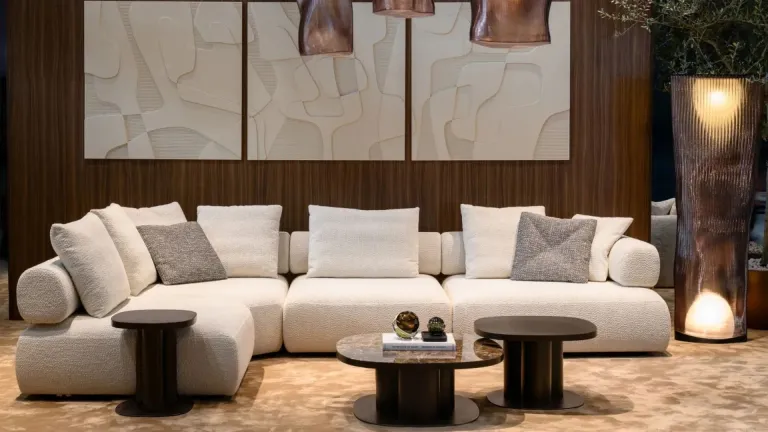
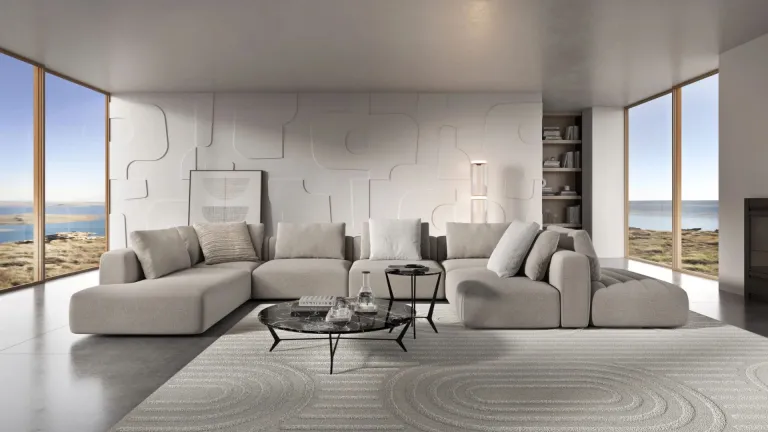
You have found the perfect sofa. The shape is right, the softness is right, and in the showroom the fabric looked exactly like the warm beige you imagined. Then the delivery arrives and, in your living room, that same beige suddenly leans grey. Sound familiar? It is one of the most common frustrations in furnishing a home – and one of the easiest to avoid. The solution fits in an envelope: a fabric sample, used well.
Why color changes when it comes home
No two rooms show color the same way. A north-facing living room cools every shade down; southern light warms it up. Showroom lighting is designed to flatter, while at home the fabric will live under morning daylight, afternoon shadows and the warm glow of evening lamps. Add the reflections from your walls, floor and curtains, and it becomes clear why a fabric can look like three different colors in three different interiors. A sample is not a formality – it is the only way to see the true color in its future surroundings.
Test in the exact spot, at different times
Bring the sample home and place it exactly where the sofa will stand – not on the windowsill, not on the table by the lamp, but on the seat of your current sofa or a chair in the target spot. Then give it time. Look at it in the morning, at midday and after dark with your usual lighting switched on. A shade that delights at noon may feel flat at 8 p.m., and vice versa. If the fabric passes the full daily cycle, you can choose it with confidence.
One more trick: view the sample both horizontally and vertically. Seats, backrests and sides of a sofa catch light at different angles, and some weaves shift tone noticeably depending on orientation.
Color never lives alone
A fabric sample should meet the whole room, not just your imagination. Hold it against the wall color, lay it on the flooring, place it next to your curtains, rug and coffee table. Warm wood, cool marble or dark ceramic surfaces will each pull the fabric in a different direction. This is also the moment to think in compositions: if you are planning an armchair or pouffe in a companion fabric, test the samples together and check how the textures converse.
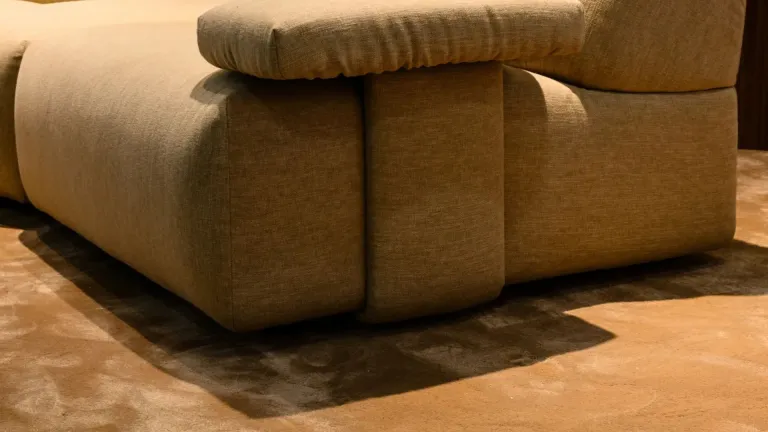
Texture, in fact, deserves as much attention as color. A smooth weave reflects light and reads slightly lighter; a structured, soft-pile fabric absorbs it and gains depth. Touch matters too – a sofa is furniture you live in, so the sample should be pleasant under your hand, not just pretty to look at.
From sample to sofa
At Olta, fabric is an integral part of the design, not an afterthought. From smooth, refined finishes to rich, tactile textures, each upholstery option is carefully considered to complement the model’s shape, highlight its tailoring and seams, and enhance its overall silhouette. It is worth staying within these recommendations: they exist to guarantee the finished effect, because due to tailoring constraints not every fabric suits every model.
The final step is the one no sample can replace: sit down. Visit a showroom, feel the chosen fabric on an actual sofa and check how it works with the softness you prefer. The sample gives you certainty about color; the showroom gives you certainty about everything else. Together, they turn choosing a sofa from a leap of faith into a confident, informed decision – one you will be happy with for years.
FAQ
Why does a fabric look different at home than in the showroom or online? Because of light and surroundings. Showroom lighting is neutral and even, while your home mixes daylight from a specific direction with warm artificial light, plus reflections from walls and floors. Screens distort colors further, which is why a physical sample viewed at home is the only reliable reference.
Where exactly should I place the sample when testing it? In the precise spot where the furniture will stand, ideally on the seat of your current sofa. Check it in the morning, at midday and in the evening with your lamps on, and view it both flat and upright – different angles catch light differently.
Should I test the sample against other elements of the room? Yes, always. Hold it against the wall, the floor, curtains and nearby furniture such as coffee tables. Surrounding materials – warm wood, stone, dark ceramics – subtly shift how the fabric reads, so the sample should be judged in full context.
Can I order any Olta fabric for any sofa model? No – each Olta model has its own list of recommended fabrics, and due to technical tailoring constraints some fabrics are excluded for specific models. Staying within the approved range guarantees that the seams, upholstery and overall silhouette look exactly as designed.
Is a fabric sample enough to make the final decision? It settles the question of color and texture, but not of comfort. Softness is a personal sensation, so before ordering, sit on the chosen model in a showroom. The combination of a home-tested sample and a live test of the furniture is the safest path to a confident purchase.