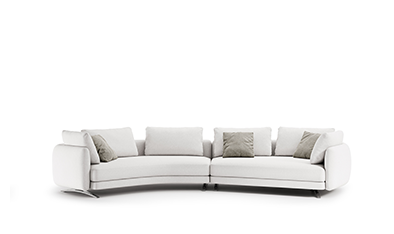
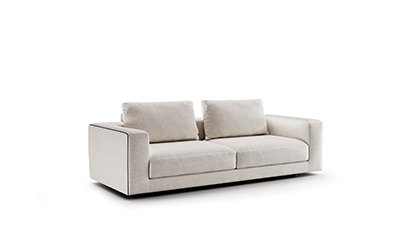
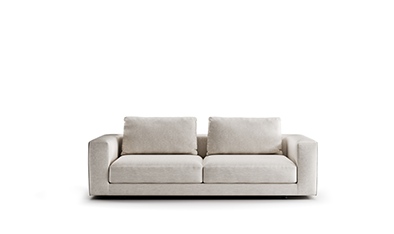
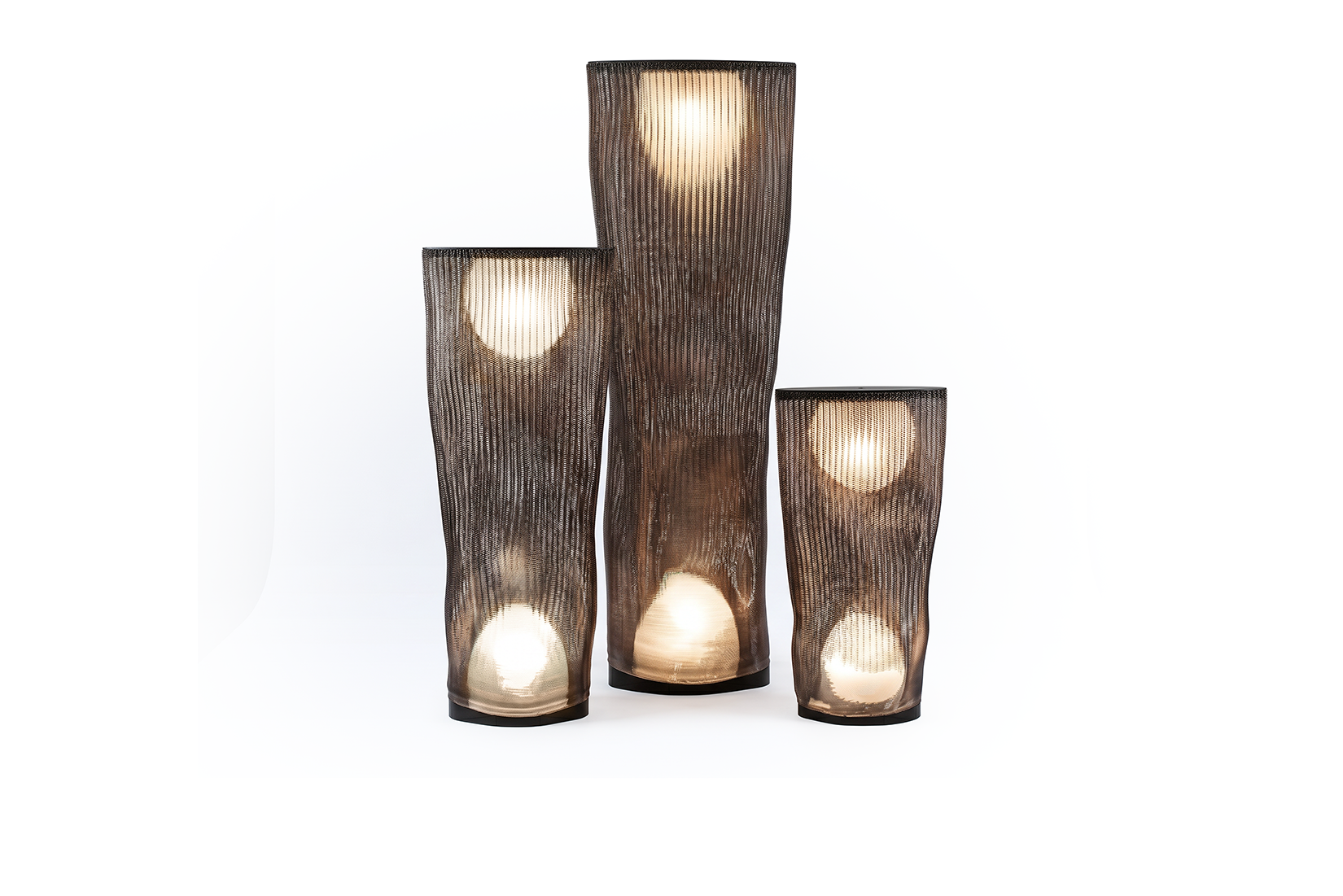
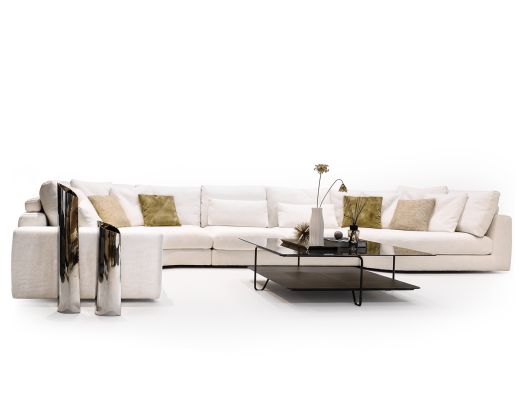
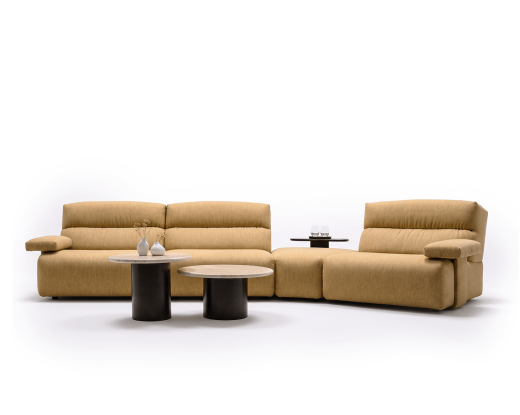
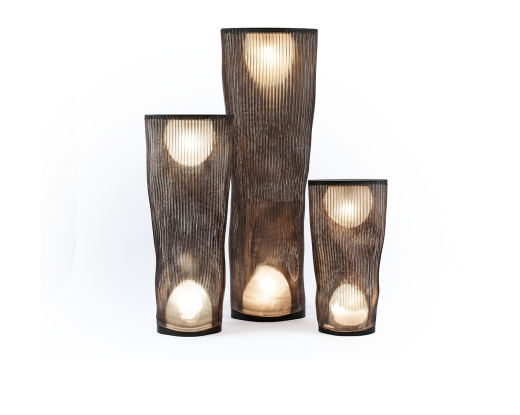
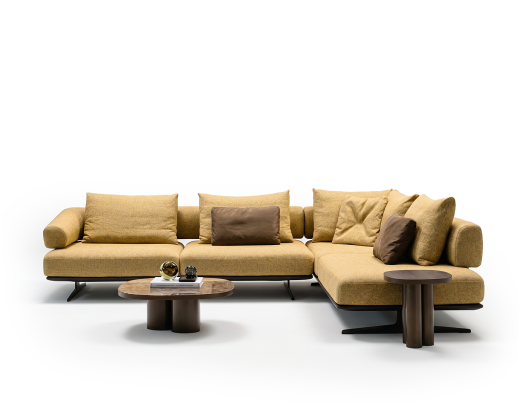
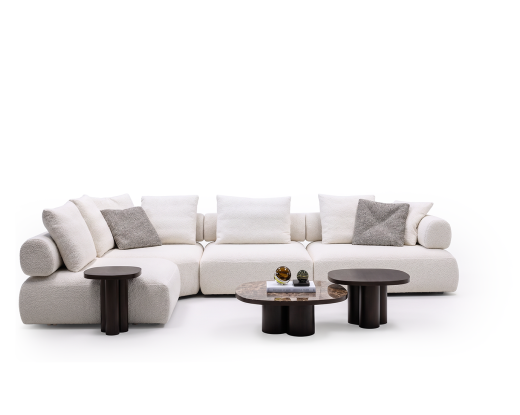
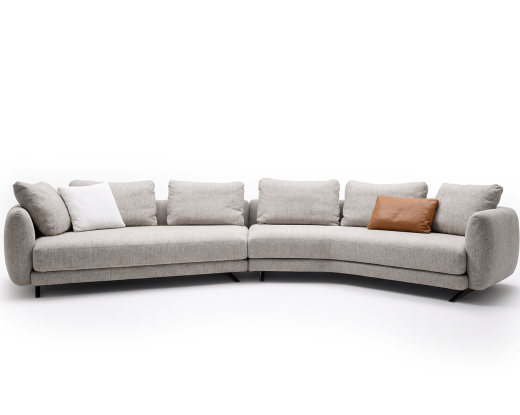
A quiet corner dedicated to reading or unwinding does not require an entire room. Often, a single armchair paired with a well-chosen side table is enough to define a personal retreat. OLTA approaches these intimate arrangements with the same attention to proportion, comfort, and material quality found in its larger furniture compositions.
Choosing the Armchair as the Focal Point
The armchair sets the tone for the entire nook. Lenox and Kelly armchairs offer supportive seating with clearly defined silhouettes, making them suitable for longer moments of rest. Their compact footprints allow them to fit comfortably into bedrooms, living rooms, or transitional spaces without overwhelming the interior.

For a softer, more enveloping feel, Coco’s curved form naturally invites relaxation. Positioned near a window or bookshelf, it creates a sense of enclosure while remaining visually light—an important balance in smaller spaces.

Pairing with a Functional Side Table
A side table should support daily rituals without distracting from the chair itself. Six, with its restrained proportions, works well beside upholstered forms, offering a stable surface for a book or cup without competing visually. In contrast, Taxi’s sculptural base introduces a subtle accent, ideal when the nook is meant to stand out within a larger room.
Table height matters: the tabletop should align comfortably with the armrest height, measured in centimeters, to ensure effortless use while seated.
Defining the Space Through Placement
Take the Ray armchair, for example—its expressive shape benefits from thoughtful spacing. Placed at a slight angle rather than parallel to walls, it creates a more relaxed posture. Adding a side table just within arm’s reach completes the composition without enclosing it.

Lighting and distance play supporting roles. Allow enough space around the chair for circulation, while keeping the table close enough to remain practical.
Practical Tips for a Well-Balanced Nook
- Keep the palette consistent between upholstery and table finishes
- Avoid oversized tables that dominate the seating area
- Position the nook where natural light enhances its function
FAQ
Can OLTA armchairs be used independently from sofas?
Yes. All OLTA armchairs are designed as standalone pieces, suitable for individual seating zones.
Which side tables work best for small spaces?
Compact models such as side tables Six, Orio, Taxi and Metro are well suited to limited areas.
Is it possible to combine different OLTA collections in one nook?
Yes. OLTA collections share compatible proportions, allowing cohesive combinations.
Are OLTA products produced in Europe?
Yes. All furniture reflects European craftsmanship and quality standards.
Creating a cohesive interior no longer means purchasing a complete furniture set from a single collection. OLTA encourages a more thoughtful approach: combining sofas, armchairs, and tables across collections to reflect how people truly live. When proportions, materials, and scales are aligned, mixed arrangements feel intentional rather than accidental.
Start with a Sofa as the Anchor
Every composition begins with a central element. Ritz and Hudson sofas offer clearly defined forms that work well as visual anchors. Their balanced proportions make them compatible with a wide range of complementary pieces, allowing the sofa to set the rhythm without dominating the space.

Introduce Contrast Through Seating
Once the main sofa is in place, contrast adds character. Armchairs such as Ray—with its sculptural silhouette—or the more compact Kelly can be positioned independently, creating flexible seating zones. Instead of mirroring the sofa, these pieces introduce variation while maintaining visual coherence through shared material palettes.
Coffee Tables as Functional Connectors
Tables play a crucial role in tying different elements together. The Metro coffee table, for instance, offers restrained geometry that pairs well with both structured and softer seating forms. In larger layouts, combining it with Orio allows for layered functionality, adapting the arrangement to everyday use without overcrowding the space.

Modular Thinking Beyond the Sofa
Mixing does not stop at individual pieces. Modular systems—Diva’s clean-lined modules, for example—can be paired with standalone furniture to create hybrid layouts. This approach works especially well in open-plan interiors, where the sofa defines zones while armchairs and tables provide flexibility.
Balance Scale and Distance
Successful mix-and-match interiors rely on proportion. Maintain consistent seat heights and allow clear circulation paths measured in centimeters. Thoughtful spacing ensures that each piece retains its function while contributing to a unified whole.
Practical Guidelines for Mixing OLTA Pieces
- Choose one dominant form and let other elements play a supporting role
- Repeat materials or finishes to maintain visual continuity
- Use tables to bridge differences in sofa and armchair geometry
FAQ
Can OLTA pieces from different collections be combined?
Yes. OLTA designs its collections with compatible proportions, making cross-collection combinations both functional and visually consistent.
Is it better to mix within one category or across categories?
The most balanced interiors often combine both—pairing a sofa from one line with armchairs and tables from others.
Do mixed arrangements work in smaller spaces?
Yes. Compact pieces such as Kelly or streamlined tables like Metro are well suited to limited interiors.
Are OLTA products produced in Europe?
Yes. All pieces reflect European craftsmanship and design quality.
The modern living room works overtime. Morning yoga, afternoon reading, evening entertaining – one space must gracefully transition between solitary relaxation and social energy. Multifunctional furniture makes this possible without compromising style or comfort.
Modular flexibility is key
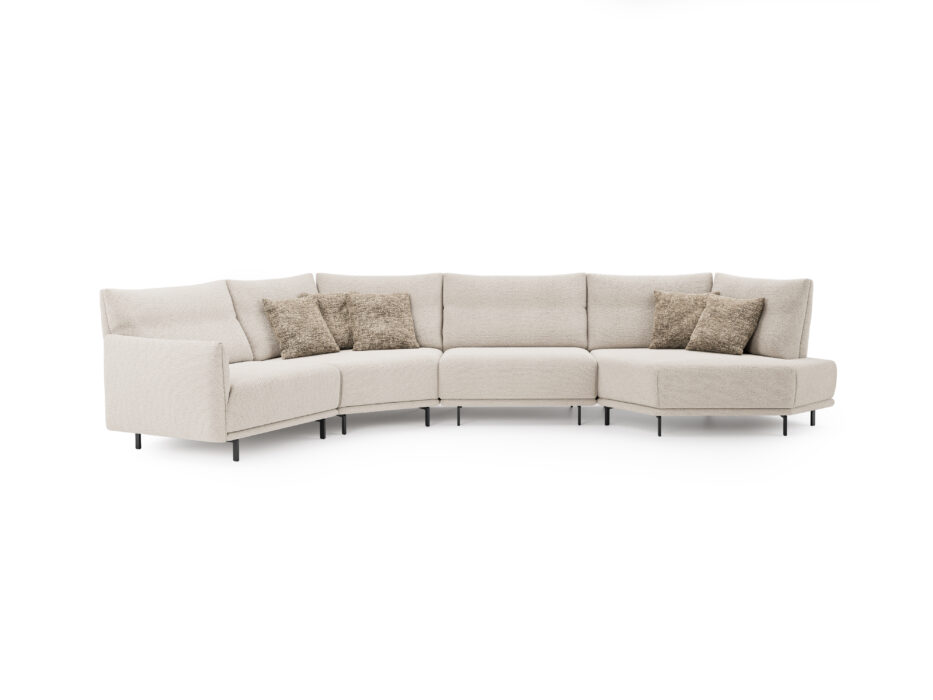
Reconfigurable seating adapts to shifting needs throughout the day. A sprawling L-shape perfect for solo binge-watching sessions transforms into an open, conversation-friendly arrangement when guests arrive. Anaga‘s adjustable headrests lower for social settings, then rise for social settings, then lower for cocooned evening relaxation. Reverso and Goya offer similar versatility – modules that can be pushed together for intimate lounging or separated to accommodate a crowd.
Coffee tables that multitask
Your coffee table works harder than any other piece. The Orio collection provides surface space for morning laptops, afternoon books, and evening drinks alike. Consider height and accessibility: lower tables encourage relaxed floor-style gatherings, while slightly taller options ease the transition from daytime productivity to cocktail hour.

Poufs and armchairs: secret weapons
Lightweight seating expands capacity without cluttering your layout. Coco and Oval armchairs tuck into corners during the day, then pull forward to complete a conversation circle at night. Poufs – Uno, or the ottoman modules available with most sofa collections – serve as footrests for solo lounging, extra seating for parties, or impromptu side tables when topped with a tray.

Lighting shapes the mood
Furniture alone cannot complete the transformation. Layer ambient, task, and accent lighting to shift the atmosphere as the day progresses.
FAQ
How many seats should I plan for evening gatherings?
A practical rule: your primary seating plus two flexible options. A three-seat modular sofa combined with two poufs and an armchair comfortably hosts six to seven guests without overwhelming daytime proportions.
Can one sofa really work for both lounging and entertaining?
Yes! Modularity makes the difference. Deep-seated configurations like Hudson or Reverso support full relaxation, while their reconfigurable elements open sightlines for group conversation when needed.
What’s the fastest way to transition a room from day to night mode?
Rearrange poufs and armchairs into a circular formation, dim overhead lights in favour of lamps, and clear coffee table clutter. Five minutes transforms the energy completely.
Your sofa is the centrepiece of daily life. Yet when it comes to care, misconceptions abound. Let’s separate fact from fiction and discover how simple maintenance keeps premium upholstery looking its best for years.
Myth: Frequent vacuuming damages fabric
Fact: Regular vacuuming (weekly for high-use pieces) actually protects fibres by removing dust and debris before they settle deep into the weave. Use a soft brush attachment and gentle strokes – this simple habit extends fabric life significantly.
Myth: All stains require immediate scrubbing
Fact: Scrubbing pushes liquids deeper into cushion layers. Instead, blot spills gently with a clean, dry cloth. For stubborn marks, test any cleaning solution on a hidden area first. OLTA’s removable cushion covers – featured across collections from Elixir to ANAGA – simplify spot treatment considerably. For ultimate stain resistance, consider ordering your furniture in Aqua Pure fabric – an innovative textile technology that allows most spills to be cleaned with water alone.

Myth: Sunlight doesn’t affect indoor furniture
Fact: UV exposure fades fabric over time, even through windows. Position your sofa away from direct sunlight, or use curtains during peak hours. Rotating cushions periodically ensures even wear and colour consistency.
Myth: Professional cleaning is only for visible dirt
Fact: Annual professional cleaning removes allergens and refreshes fibres that regular vacuuming cannot reach. This investment protects both appearance and air quality in your home.
Myth: Water-based cleaners work on all fabrics
Fact: Not universally. Check your fabric’s care code first: W (water-safe), S (solvent-only), WS (both), or X (vacuum only). When uncertain, consult OLTA’s care guidelines for your specific collection.
Myth: Pets and premium upholstery don’t mix
Fact: With the right choices, they absolutely can. Opt for tightly woven, durable fabrics that resist snagging. Regular brushing of loose pet hair prevents it from embedding in fibres – a lint roller between vacuuming sessions works wonders.
A beautifully designed living room engages more than just the eyes – it invites touch. Layering textures across your furniture creates depth, warmth, and visual interest that flat, single-material spaces simply cannot achieve. Here’s how to master the art of textural balance.
Start with your foundation
Your sofa sets the textural tone. Linen offers breathable, relaxed elegance with a subtle natural grain. Velvet brings drama and softness, catching light beautifully. Bouclé – with its looped, nubby surface – adds contemporary warmth without formality. Choose based on your lifestyle: linen for airy minimalism, velvet for luxurious depth, bouclé for tactile cosiness.
Build contrast through seating
Once your sofa establishes the base, introduce complementary textures through armchairs and poufs. A velvet sofa pairs beautifully with a bouclé armchair – the Coco, Grey, or Lenox collections deliver this perfectly. Linen foundations welcome leather accents: consider a Grey armchair or UNO pouf in rich cognac or deep black to anchor the arrangement.

The rule of three
Aim for three distinct textures within view. More creates chaos; fewer feels flat. A bouclé sofa, leather pouf, and linen accent cushions strike ideal balance – varied enough to intrigue, cohesive enough to calm.
Don’t forget temperature
Textures carry psychological warmth. Velvet and bouclé feel cosy, perfect for cooler climates. Linen and leather read cooler, suiting warmer environments or summer styling. Adjust your mix seasonally for spaces that feel intuitively right year-round.
FAQ
Can I mix velvet and leather in the same space?
Absolutely. These textures complement beautifully – velvet’s softness balances leather’s sleekness. A velvet-upholstered Goya sofa alongside a leather Ray armchair creates sophisticated contrast without conflict.
Is bouclé practical for everyday use?
Yes, when chosen carefully. Tightly looped bouclé resists pilling better than loose weaves. Avoid if you have pets with sharp claws, as loops can snag. For high-traffic homes, bouclé works best on accent pieces rather than primary seating.
How do I unify different textures visually?
Stick to a cohesive colour palette. Three textures in tonal creams feel harmonious; three textures in clashing colours feel chaotic. Let texture provide variety while colour maintains calm.
Some furniture you sit on. LUIS is different – you fall into it, and it embraces you back. This new collection embodies the slow living philosophy through every carefully considered detail: a low-slung silhouette that grounds you, contoured cushions that cradle your body, and a presence that invites you to pause.
Classic foundations, modern sensibility
The creation of this sofa was a path without compromise, the result of a relentless pursuit of perfection. LUIS draws from timeless design principles while refusing to feel dated. The substantial, grounded form creates visual stability, yet softness defines every surface. A three-layer foam system – memory foam over high-resilience cushioning – delivers support that moulds to you without losing structure. Back cushions filled with memory foam add plush comfort where you need it most.

Adaptable elegance
Adjustable armrests shift LUIS between formal and relaxed modes effortlessly. Raise them for structured sitting during conversation; lower them for casual lounging on lazy afternoons. This subtle flexibility means one sofa serves many moods without compromising its refined character.
The Human Touch collection
LUIS pairs exclusively with fabrics from the Human Touch range – materials selected for their tactile warmth and emotional resonance. Every point of contact becomes intentional, transforming routine sitting into a sensory experience that fosters genuine relaxation.
FAQ
What makes LUIS different from other classic-style sofas?
The contoured backrest sets LUIS apart. Innovative memory foam that reacts to body weight and temperature creates ergonomic support within an embracing form – classic aesthetics with contemporary comfort engineering.
Can I configure LUIS as a modular arrangement?
Yes. The collection offers various elements including corner modules, open-end pieces, and poufs. You can build configurations suited to your space while maintaining the cohesive, grounded aesthetic throughout.
How do the adjustable armrests work?
Simply push or pull the headrests and armrests to your desired position – they stay exactly where you leave them. This intuitive system lets you shift positions naturally as your activity changes.
Choosing the right sofa color can transform your living space from ordinary to extraordinary. Yet many homeowners hesitate, paralyzed by the fear of making the wrong choice. The truth is, with the right approach, selecting sofa colors becomes an exciting opportunity to express your style while creating a space that serves you for years to come.
Understanding your space’s foundation
Before falling in love with any particular shade, assess your room’s existing elements. Natural light plays a crucial role – north-facing rooms benefit from warmer tones like terracotta or cream, while south-facing spaces can handle cooler blues and greys beautifully. Consider your flooring, wall colors, and architectural details. Models like Maxwell or Avant work exceptionally well as neutral anchors, allowing you to experiment with colorful accessories without overwhelming the space.

The psychology of sofa colors
Colors influence mood and energy levels more than we realize. Deep blues and forest greens, perfect for pieces like Hudson or Onyx, create calming retreats ideal for relaxation and reading. Warm greys and beiges offer sophisticated neutrality – think Elixir or Oxygen collections – providing a serene backdrop that adapts to seasonal décor changes. Bold colors like burgundy or navy make powerful statements but require confident styling.

Practical considerations for long-term satisfaction
Color Durability Factors:
- Light colors show dirt and wear more quickly but create spacious, airy feelings,
- Medium tones like charcoal or taupe offer the best balance of practicality and style,
- Dark colors hide stains well but can show pet hair and dust,
- Textured fabrics in collections like Stone or Reverso camouflage wear better than smooth surfaces.
Consider your lifestyle honestly. Families with young children might prefer forgiving colors in durable fabrics, while empty nesters can explore lighter, more delicate options. Modular systems offer flexibility – individual modules can be reupholstered in different colors over time, allowing gradual style evolution.
Timeless vs. Trendy: making smart choices
Investing in quality pieces like those from OLTA’s collections means thinking long-term. Classic colors – whites, greys, navy, and warm beiges – provide enduring appeal and easier restyling options. These work beautifully in models like Amalfi or Horizon, creating sophisticated foundations that welcome seasonal accent changes.
If you crave color, consider the 80/20 rule: 80% neutral base with 20% personality through accent pieces. This approach lets you experiment with trendy colors through cushions, throws, and artwork while keeping your major investment piece timeless.
Working with existing décor
Your sofa should harmonize with, not compete against, other furnishings. If you have a colorful rug or bold artwork, choose sofas in complementary neutrals. Pieces in muted tones can ground vibrant spaces beautifully. Conversely, if your space feels too neutral, a colored sofa becomes the perfect focal point – perhaps a rich cognac leather in Ritz or a deep green velvet in Mistral.

Testing colors with confidence
Never choose colors from small swatches alone. Request larger samples and observe them in your space at different times of day. Natural and artificial lighting dramatically affects color perception. Many OLTA collections offer extensive fabric options, allowing you to find the perfect shade that works with your specific lighting conditions.
Consider creating a mood board with your chosen sofa color alongside existing room elements. This visual exercise often reveals harmonies or conflicts you might miss otherwise.
The flexibility advantage
Olta furniture is available in a wide range of fabrics with various textures and in many different colors. Mix complementary tones within the same arrangement – perhaps combining cream and grey modules for subtle visual interest. This approach creates depth while maintaining cohesion, perfect for contemporary interiors that value both comfort and style.
FAQ
Q: Should I choose a sofa color based on current trends? A: Base your choice on timeless appeal and personal preference rather than trends alone. Quality OLTA pieces are long-term investments – choose colors you’ll love for years. You can always incorporate trends through easily changeable accessories.
Q: How do I know if a bold color will work in my space? A: Test the color against your existing décor using large fabric samples. Bold colors work best when they complement rather than clash with your room’s undertones.
Q: What’s the safest color choice for a high-investment sofa? A: Medium-toned neutrals like warm grey, taupe, or navy offer the best balance of style, practicality, and longevity. These colors hide wear well while providing sophisticated foundations for various decorating styles.
The boundaries between work and home continue to blur. Today’s living rooms host video conferences in the morning, family gatherings by afternoon, and movie marathons at night. This evolution demands furniture that transitions as seamlessly as we do between our various roles. At OLTA, where European craftsmanship meets modern flexibility, we understand that successful multitasking spaces require more than just moving furniture around – they need pieces designed to excel at every task.
The new living room paradigm
Gone are the days when living rooms served single purposes. Modern life demands spaces that shift from professional to personal without missing a beat. Stone’s modular system addresses this reality with modules that reconfigure from focused work setups to relaxed social arrangements in minutes. Each piece maintains its integrity whether standing solo as a work chair or joining others for evening entertainment.
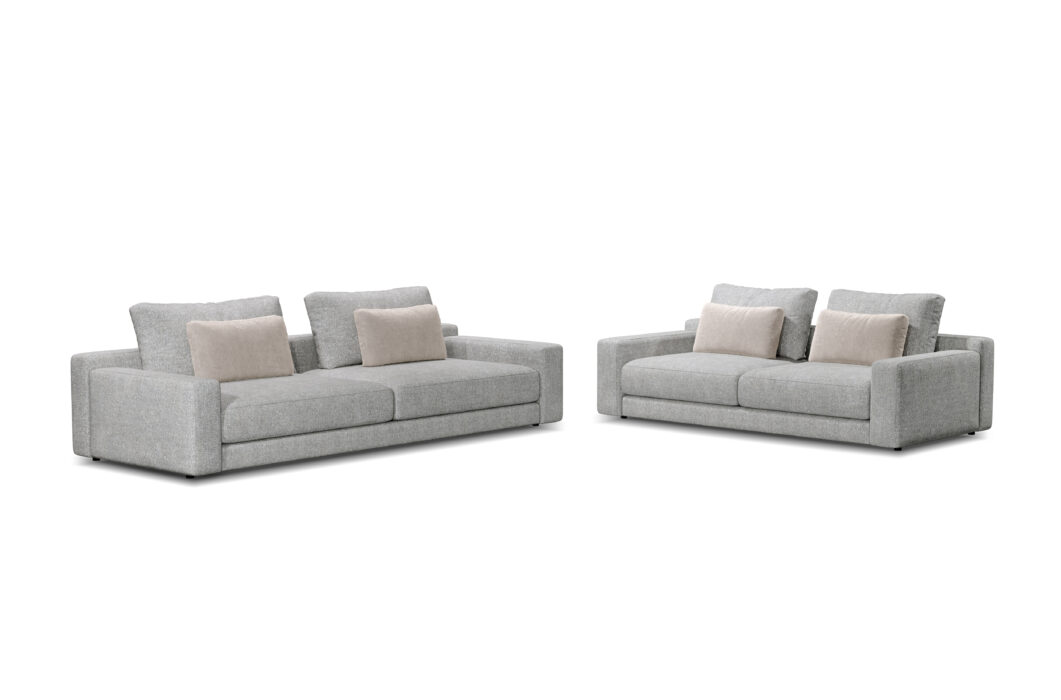
The key to successful multitasking spaces lies in understanding flow. Reverso’s reversible design offers comfort from both sides, regardless of orientation. In multitasking spaces, this means effortless repositioning. Face your desk setup in the morning, then rotate toward the TV area for evening relaxation without sacrificing comfort or moving heavy furniture.
Creating productive work zones
When incorporating work areas into living spaces, positioning matters as much as comfort. Maxwell’s structured support provides the ergonomic backing necessary for extended computer use, while its refined aesthetic ensures your workspace never feels out of place.
Consider these work-friendly configurations:
The corner office: Position modules perpendicular to walls, creating a defined workspace that maintains connection to the room. Avant’s elegant lines make this arrangement feel intentional rather than makeshift.

The floating desk: Use a console table behind modular seating to create an instant office. Hudson collection modules provide comfortable seating height for standard desks while maintaining living room sophistication.
The conference setup: Arrange modules facing each other for video calls. Onyx creates a substantial presence that impresses on camera while remaining inviting off-screen.
Transitioning from productivity to relaxation
The magic happens in the transition. After closing your laptop, your living room should effortlessly shift into relaxation mode. In the Elixir collection, memory foam combines with feathers to embody this flexibility – supportive enough for work, yet indulgent enough for evening unwinding.
Goya particularly excels at this transformation. Individual modules that served as separate work stations during the day connect to create expansive lounging arrangements for evening. The consistent height and depth across modules ensure seamless integration regardless of configuration.

Smart storage solutions complement these transitions. Stone’s wooden shelf provides discreet storage for work materials, letting them disappear when leisure time begins. No visible reminders of deadlines when you’re trying to decompress.
Defining boundaries without walls
Open-plan living requires creative boundary setting. Modular approach enables you to create subtle separations between work and relaxation zones. Position modules back-to-back to delineate your office area from entertainment space while maintaining visual flow.
A simple room divider placed between your sofa and desk can visually separate work from relaxation without blocking light or making the room feel smaller. The contemporary aesthetic adds architectural interest while serving practical purposes.
FAQ
Q: How do I prevent my living room from looking like an office?
A: Choose modular systems with residential aesthetics. Amalfi maintains sophisticated design even in work configurations. Hide office supplies in attractive storage and use decorative accessories to maintain warmth.
Q: Can modular sofas really provide proper ergonomic support for working?
A: Absolutely. Lenox pieces feature construction quality that provides excellent lumbar support, with seating height options (43 cm or 50 cm) to match your desk setup. Add a small cushion for additional back support during extended work sessions.
Q: What about video call backgrounds?
A: Position modules to create attractive backgrounds. Six provides clean lines for professional backdrops, while strategic placement of artwork and plants enhances your on-camera presence. Avoid positioning directly in front of windows to prevent backlighting issues.
Visiting a furniture showroom should be exciting, not overwhelming. The right preparation transforms browsing into focused decision-making, helping you find pieces that truly work in your space. Here’s your essential checklist for a productive showroom visit.
Room measurements and floor plan
Never leave home without accurate measurements. Bring your room dimensions, doorway widths, and ceiling heights. A simple floor plan sketch showing windows, doors, and existing furniture helps visualize how your dream furniture will fit. Measure twice – many showroom disappointments stem from pieces that look perfect but won’t fit through the front door.
Include measurements of your current seating to compare comfort levels. For example, models like Spectra or Oxygen have specific seat depths and heights that may differ significantly from your existing furniture.

Visual references from your space
Photos speak louder than descriptions. Bring images of your room from multiple angles, including close-ups of existing colors, textures, and finishes. This helps showroom consultants suggest complementary pieces and identify whether that beautiful Onyx sectional will harmonize with your décor or clash dramatically.

Include shots of your lighting – both natural and artificial. Colors and fabrics can look completely different under showroom lights versus your home environment. To make sure the furniture will be in the right color, you can also ask a showroom consultant for fabric samples and check how they look in your own interior.
Material and color samples
Essential Samples to Bring:
- Paint chips from your walls
- Fabric swatches from existing furniture or curtains
- Wood samples from flooring or furniture finishes
- Metal finishes from hardware or light fixtures
These references ensure color coordination and help you evaluate how different fabric options in Olta collections will work with your existing palette.
Budget parameters and timeline
Set realistic budget ranges including delivery and setup costs. Quality pieces like those in OLTA collections are investments – knowing your limits helps focus on appropriate options without uncomfortable surprises.
Consider your timeline too. Custom orders and specific fabric choices can extend delivery times significantly.
Strategic questions for maximum value
Prepare specific questions about construction quality, warranty terms, and customization options. Ask about fabric durability, frame materials, and maintenance requirements. For modular systems, understand expansion possibilities and individual component replacement options.
Inquire about delivery logistics, especially for larger pieces or challenging access points.
Making the most of your visit
Test every piece thoroughly. Sit in different positions, lean back, get up and down multiple times. Comfort that feels good for five minutes in a showroom needs to work for hours at home. Our armchairs Kelly or Grey might surprise you with their ergonomic differences.

Don’t rush decisions. Quality furniture purchases deserve careful consideration. Take notes, photos (if permitted), and fabric samples for home comparison.
Beyond the basics
Consider bringing a friend with honest opinions and different physical dimensions. What feels comfortable to you might not work for other family members. Someone else’s perspective can reveal blind spots in your decision-making.
If working with a designer, bring their contact information and any specific requirements they’ve outlined.
FAQ
Q: Should I bring my partner or family members to the showroom? A: Yes, especially for major pieces. Different body types experience comfort differently, and family members may have practical insights you’ve overlooked. However, limit the group to key decision-makers to avoid confusion.
Q: How long should I plan to spend in the showroom? A: Allow 2-3 hours for thorough evaluation, especially when considering major purchases like sectionals or multiple pieces. Quality decisions can’t be rushed, and you’ll want time to test comfort thoroughly.
Q: What if I like something but want to think about it? A: Most reputable showrooms encourage thoughtful decisions. Ask about hold policies, take detailed notes and photos, and request fabric samples. Quality pieces deserve careful consideration rather than impulse purchases.
The choice between coffee tables and side tables isn’t just about filling empty spaces – it’s about understanding how each piece serves your daily routines. While both provide surfaces for drinks, books, and decorative objects, their distinct roles shape how we move through and use our living spaces. At OLTA, our table collections demonstrate that the right choice transforms functionality into elegance.
Understanding the fundamental differences
Coffee tables anchor seating arrangements, creating a central hub for shared activities. Orio’s coffee table version embodies this principle with its minimal yet commanding presence, providing ample surface space while maintaining visual lightness. Positioned 35–45 cm from your sofa, coffee tables invite communal use: from board game nights to casual dining.
Side tables operate differently. Orio’s side table version showcases their essential nature: accessible personal space within arm’s reach.
Room dynamics and traffic flow
Coffee tables define circulation patterns in your living room. Six offers versatile sizing options that can either open up space with slender profiles or command attention with broader surfaces. Their lower height – 35 and 46 cm – maintains sightlines across the room, preserving openness while providing functionality.
Side tables, conversely, work along room perimeters. Taxi demonstrates this perfectly through its ability to tuck into corners or slide partially under sofa arms. They don’t interrupt traffic flow but rather complement it, creating convenient touchpoints throughout your space.
Matching tables to living styles
For entertainment-focused homes, coffee tables prove indispensable. Orio’s generous surface accommodates multiple drinks during parties, spreads of appetizers, or stacks of coffee table books that spark conversation. The central positioning encourages gathering and interaction.
In reading nooks or personal retreats, side tables excel. Metro’s refined proportions create perfect companions for solitary activities – holding your book and coffee during quiet mornings, or lamp and journal for evening reflection. Their intimate scale suits focused, individual use.
Small spaces: Making strategic choices
Compact living rooms demand careful consideration. A single coffee table might dominate precious floor space, while multiple side tables offer flexibility. The Taxi collection’s mobility means tables can cluster when entertaining, then disperse for daily living.

Alternatively, Six provides coffee table options slim enough for tight spaces while still offering essential surface area. The key lies in choosing proportions that serve your needs without overwhelming your room’s scale.
Material considerations and visual harmony
Table selection extends beyond function to aesthetic cohesion. Orio’s clean lines complement both modular and classic sofa arrangements. The combination of painted steel legs, ceramic top, and glass lower shelf (in the coffee table version) creates a refined, contemporary look. Three ceramic finishes allow you to match the piece to various interior styles.
Metro introduces textural variety that can either blend seamlessly or provide deliberate contrast. Consider how table materials interact with your upholstery: glossy surfaces brighten fabric-heavy rooms, while wood adds warmth to leather or modern textiles.
Practical pairing strategies
The most functional living rooms often combine both table types. Position Six as your central coffee table, then flank your seating with Taxi side tables for individual convenience. This arrangement serves both communal and personal needs without redundancy.
In modular seating arrangements, side tables offer particular value. As you reconfigure modules, Metro’s lightweight design moves easily to maintain accessibility regardless of your current layout.
FAQ
Q: Can I use only side tables instead of a coffee table?
A: Yes, particularly in small spaces. Clustering two or three Taxi tables creates coffee table functionality while maintaining flexibility to separate them when needed.
Q: What’s the ideal height difference between tables and seating?
A: Coffee tables should sit level with or 5 cm below seat cushions. Side tables work best at armrest height or up to 10 cm higher, making Metro’s proportions ideal for most seating arrangements.
Q: How do I choose between Olta’s table options?
A: Consider your primary use. Orio excels as a statement coffee table for spacious rooms. Six offers versatility for various room sizes. Metro serves perfectly as elegant side tables, while Taxi provides maximum flexibility for evolving spaces.