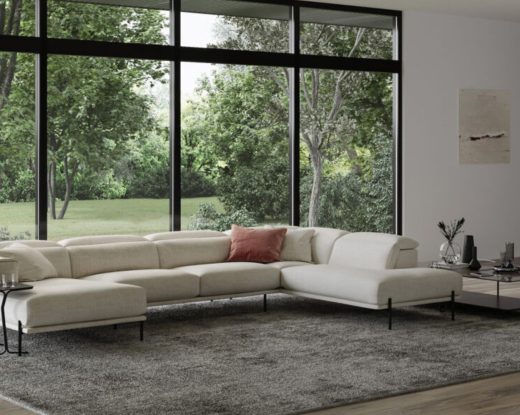
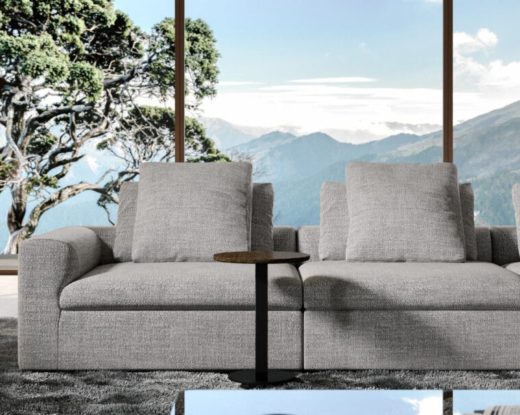
In modern interior design, the open-plan layout has become a hallmark of freedom and light. However, the challenge lies in defining functional zones without sacrificing the sense of space. The “Island” layout – a strategic positioning of a sofa away from the walls – transforms the furniture into an architectural element that subtly divides the living area from the dining room or kitchen.
The Power of the “Back View”
When a sofa is placed in the center of a room, its rear profile becomes as important as its front. Designers at Olta ensure that every model is finished with meticulous attention to detail from every angle. Onyx’s refined silhouette and perfectly tailored upholstery at the back create a clean, aesthetic barrier that feels like an intentional artistic decision rather than an exposed necessity.

For those who prefer a more organic transition, Amalfi’s soft, rounded backrest provides a gentle visual flow. This model acts as a low-profile island that does not block the line of sight, maintaining the airy feel of a large loft while clearly marking the boundary of the relaxation zone.
Strategic Zoning with Modular Systems
Large open spaces often require a substantial “anchor” to feel grounded. The Maxwell modular system addresses this need with its generous proportions and structured form. By configuring it into an L-shape or a long straight island, you create a “room within a room” that feels intimate and secure.

To further enhance this functional division, consider the height of the backrest. A lower profile, found in the Goya collection, encourages conversation between zones – allowing someone on the sofa to interact with someone in the kitchen. Conversely, models with a slightly more defined presence – such as the Samoa system – provide a stronger sense of separation, perfect for creating a cozy sanctuary in a high-ceilinged room.
Enhancing the Island with Accessories
An island layout offers a unique opportunity to layer furniture. Placing a low console or a series of poufs behind the sofa can soften the transition between zones. The Oval chair – with its distinctive shape – can be positioned at the corner of an “Island” setup to act as an informal transition piece.

Complementing the arrangement with the right coffee table is equally vital. Placing the Six table within the island’s embrace adds a touch of architectural interest that resonates with the sofa’s lines.
Practical Tips for the Island Layout
- Flow and Passage: Ensure a minimum of 90 cm of walking space around the furniture to allow for comfortable movement throughout the open-plan area.
- Rug Placement: Use a large area rug to further define the zone. All legs of the sofa should ideally rest on the rug to unify the space.
- Lighting: Position a floor lamp near the sofa’s back or side to create a vertical element that reinforces the zone’s boundaries in the evening.
FAQ
Q: Does placing a sofa in the middle of the room make it feel smaller? A: Not if the proportions are correct. Choosing a model with a lower backrest – such as the Diva sofa – maintains a clear line of sight across the room, which enhances the sense of depth rather than closing it off.
Q: How much space do I need for an “Island” layout? A: To avoid a cramped feeling, you should have at least 80–100 cm of clearance between the back of the sofa and the next functional zone.
Q: Are the sofas finished on the back for central placement? A: Yes. Every model, including the expansive Ritz system, is fully upholstered on all sides, making them ideal for central placement in any open-plan interior.